

So There’s This Empire, Right? Or, Uh, Maybe Not.
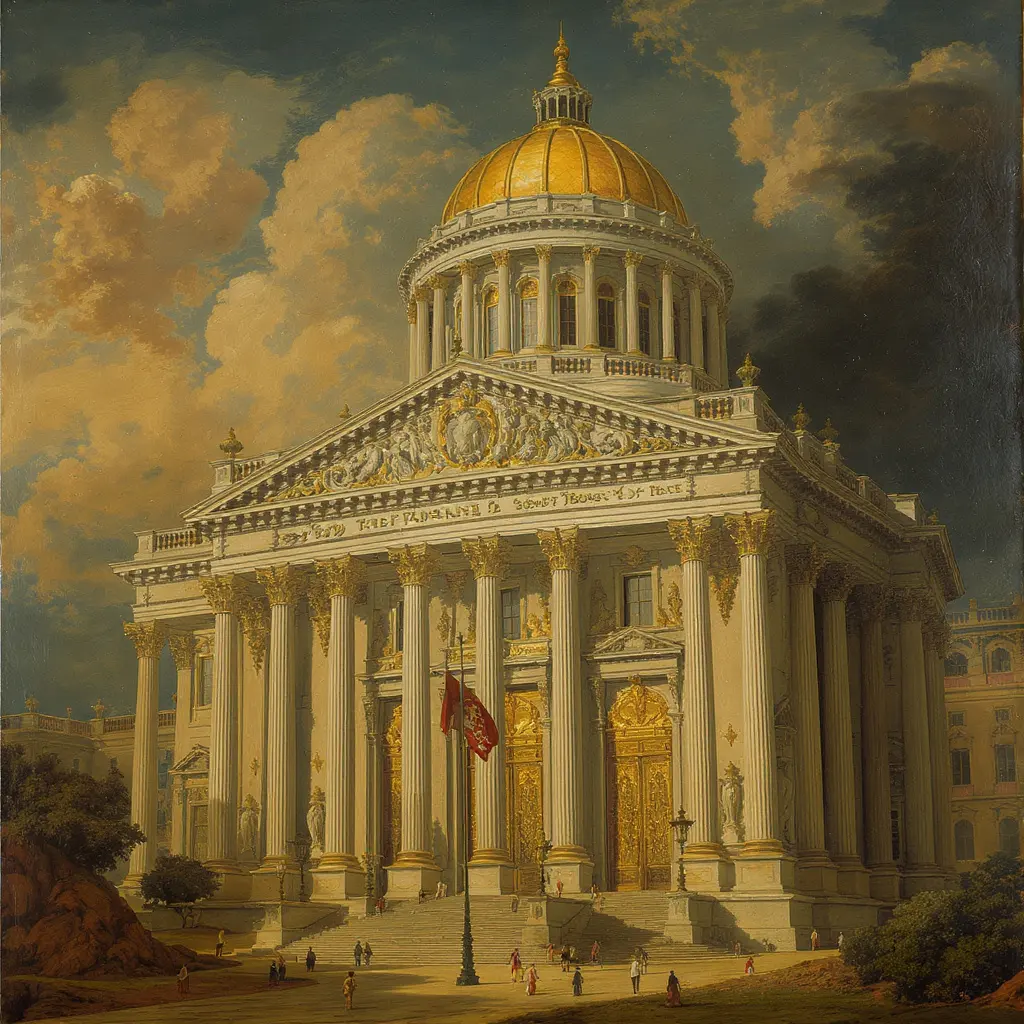
Alright, picture it: you’re walking downtown. You’re on your phone, minding your business, probably Googling whether you actually need to buy more almonds because you can’t remember if you finished the last bag. You look up. And there it is: a courthouse. But not just any courthouse. This courthouse looks like Zeus got divorced, binge-watched HGTV, and decided, “Fine, I’ll just design my own place and the kids are gonna love it.”
It has pillars. So many pillars. It looks like the building is deeply insecure about its ability to stand up without seventeen marble crutches. They’re like giant toothpicks for the world’s fanciest Jenga set. And then the dome—oh, the dome. This dome is so big it looks like NASA should be launching rockets out of it. Or, at the very least, like it’s hiding another smaller dome inside of it, like some kind of architectural Russian nesting doll.
And the doors? The doors are twelve feet tall. Twelve. Feet. Tall. I am a grown adult, I pay taxes, I floss—sometimes—but I am not twelve feet tall. These doors were not built for me. They were built for someone who has a butler named Gregory, a 19th-century monocle collection, and a pen that costs more than my car.
You keep walking. The post office is a palace. The bank is basically a temple where you can also get a checking account with a $15 monthly fee. And the train station? Forget it. It looks like it was designed for intergalactic diplomats arriving for a summit, not for Dave, who is currently eating the saddest tuna sandwich known to mankind on the platform.
And then it’s 2 a.m., and you can’t sleep, and you type “why old bank so fancy?” into YouTube. Congratulations—you’ve just booked yourself a one-way, non-refundable ticket to Tartaria. This is not just architecture anymore. No, no. This is allegedly the last remnant of a lost global super-empire. A secret civilization of giants with free electricity who were all wiped out by, and please stay with me here… mud.
Not meteors. Not aliens. Not even a cool, cinematic nuclear war. No. Mud. Beige, gloopy, uninteresting sludge. The apocalypse nobody asked for. The apocalypse that feels like someone spilled soup on history.
This is the Tartarian Empire myth. And if you believe it, our ancestors weren’t architects with blueprints and hammers. They were squatters. They just showed up one day, looked at these ready-made palaces, and thought, “Cool. Guess I live here now.” For a quick palate cleanser on how actual records work, see Why Three Centuries Aren’t Missing—and if reality keeps glitching, wear the mood: The Simulation Is Gaslighting Me.
Part 1: A Funny Thing Happened on the Way to the Map Store
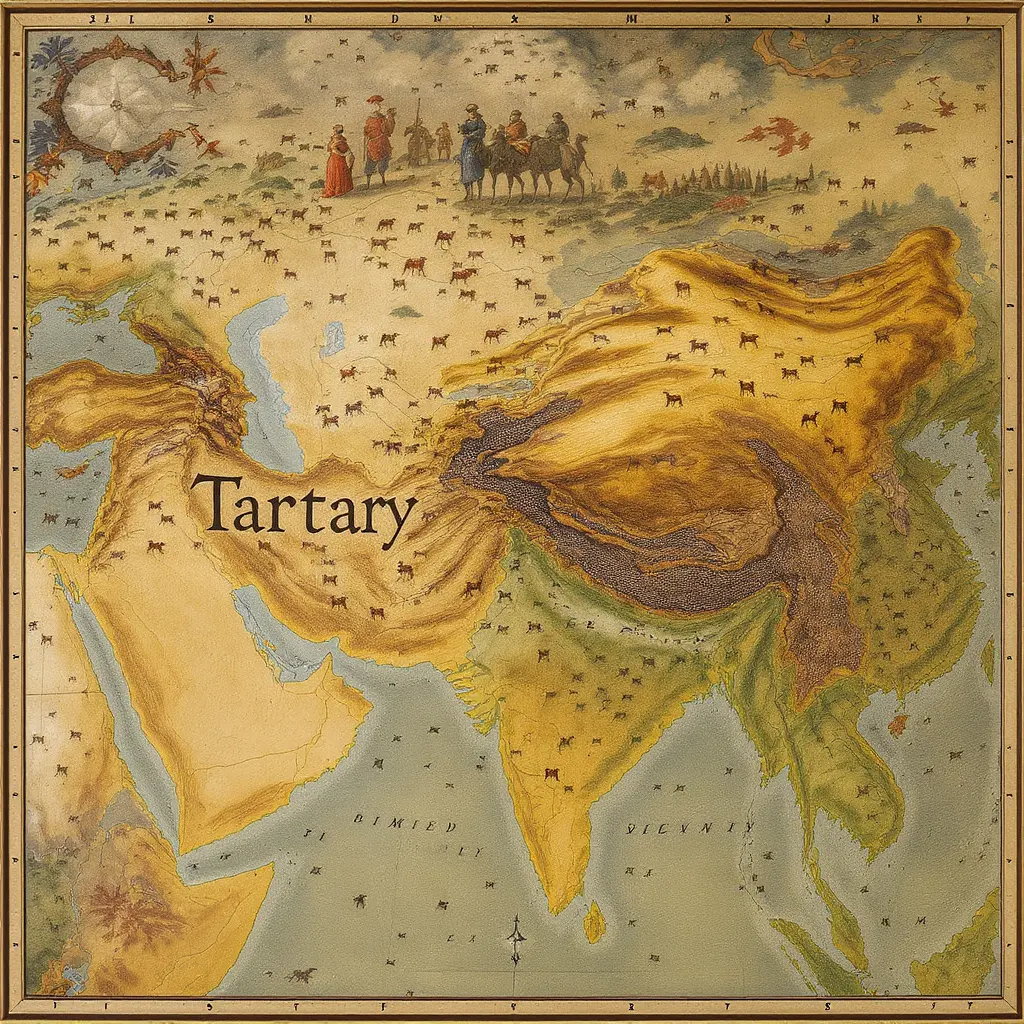
Before Tartaria became YouTube’s favorite “lost empire,” it was just a word on a map. And not even a good word. “Tartary” sounds like something you scrape off your teeth, or maybe a dipping sauce you’d deeply regret ordering at Long John Silver’s.
For centuries, European cartographers had one job: make maps of Asia without the key ingredient of ever actually going to Asia. So what do you do when there’s a giant blank spot and your boss is like, “Finish it by Friday”? You wing it. You fill it in. It’s the geographic equivalent of padding your essay with random quotes from Wikipedia at 2 a.m. You just start typing: “Here Be Dragons.” “Some Guys on Horses Live Here.” Or, if you’re really lazy and lunch is calling, you slap “TARTARY” across half the continent in giant, confident letters. Done. Nailed it. Time for beer.
This wasn’t the name of an empire. It was basically the “Lorem Ipsum” of geography. A cartographic shrug. A giant ¯\_(ツ)_/¯ plastered across Asia. Sometimes mapmakers got fancy and doodled camels or little men in fur hats just to spice it up. International guesswork disguised as art.
And then—shocking plot twist—actual explorers went there. They came back like, “Uh, hey guys? Turns out it’s not one big country called Tartary. It’s like, Siberia, Mongolia, Turkestan, and about 87 other places you didn’t bother labeling. Also, that camel you drew? Not accurate.” And so the word faded. By the 19th century, “Tartary” got stuffed in history’s junk drawer with “Here Be Dragons” and phrenology.
But the internet cannot leave junk drawers alone. In the 1990s, Russian pseudo-historians pulled “Tartary” out, slapped on some nationalist glitter, and said, “Behold, Great Tartaria: the greatest empire the world has ever known, cruelly erased by evil Western conspiracies.” Enter Nikolai Levashov: occultist, writer, and man with clearly too much free time. He insisted Russia was once the center of a glorious utopia before evil controllers ruined everything. A very convenient myth if your country just fell apart and you need a self-esteem boost.
Fast forward to YouTube. The nationalism gets lost in translation, and suddenly people in Ohio are staring at twelve-foot doors like, “Yeah, that tracks. Giants built this.” For a related masterclass in myth-manufacturing, see our Zodiac killer case file. If your timeline feels… bendy, there’s always Currently Experiencing a Mild Temporal Anomaly.
And YouTube’s algorithm? Oh, it loves this stuff more than life itself. You watch one video about “mud flood evidence” and the algorithm is like a golden retriever on Red Bull: “Oh, you like that? Okay. What if I gave you 400 hours of domes, spires, star forts, and a robot voice reading PowerPoint slides like it’s holding me hostage?” You start at Level 1, just noticing some basements have windows. By Level 10, you’re convinced star forts were wireless charging stations. By Level 70? You’re the Grand Archon of Tartaria, explaining to your cat that the baby incubators at the 1901 World’s Fair were actually cloning machines.
Part 2: Four Big Things You Gotta Swallow Like Cold Soup
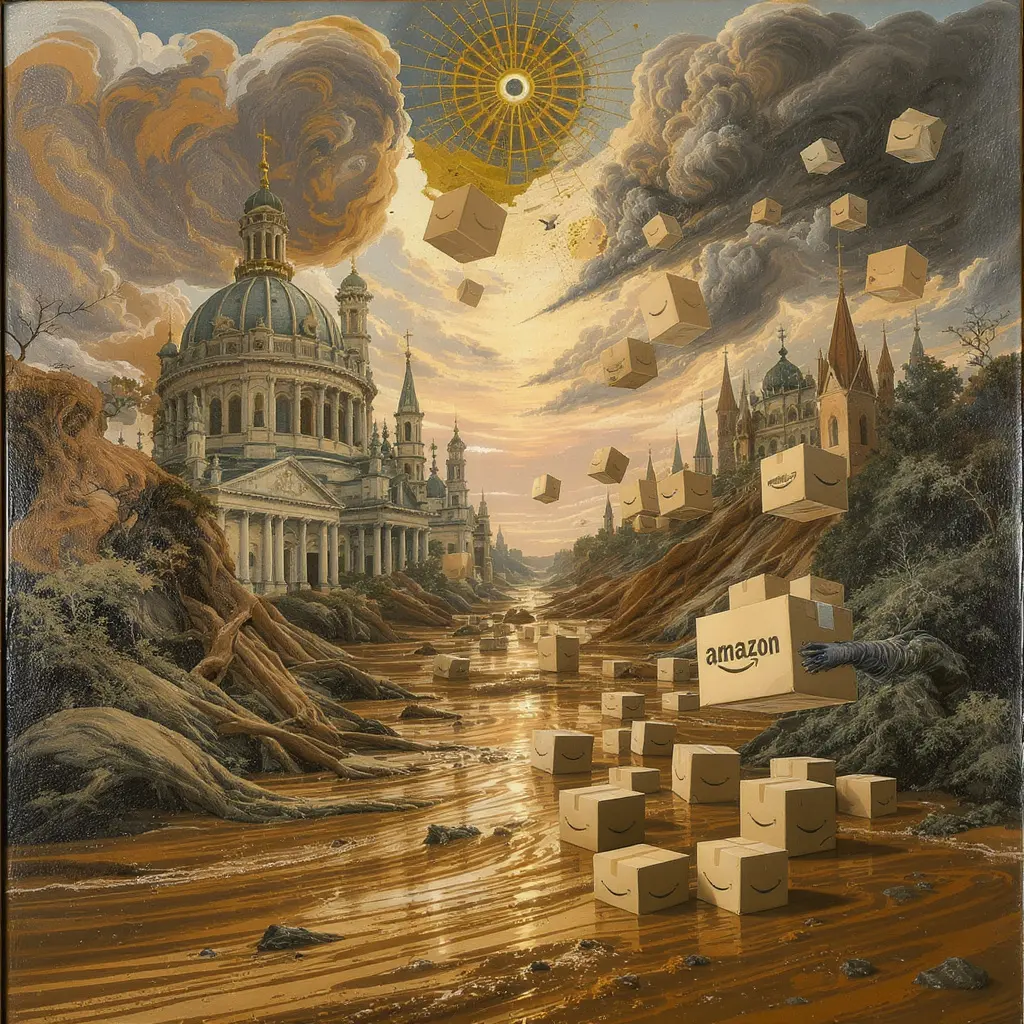
The Tartaria theory is sprawling, sticky, and way too big for the plate, but it boils down to four big ideas. Here they are.
1. All the Old Buildings Came from the Same Cosmic Ikea
Believers look at 19th-century architecture and go, “So you’re telling me that Ohio, Argentina, and Australia all independently built marble domes, giant columns, and ceilings so high you could fit a giraffe on a pogo stick? At the same time? Nah. This is one empire. This is Tartaria: The Extended Universe.”
And of course, the twelve-foot doors. If you’re eight-foot-six and trying to cash a check in 1890, finally—a door for you. For the rest of us, it’s just a daily reminder of our T-Rex arms.
Historians see something else: revivalism. The 19th century was one giant global cosplay party. Everyone wanted to look like Rome, Athens, or the fanciest bits of Paris. Architects studied at the École des Beaux-Arts in France and came home to churn out columns like it was their senior thesis. Smaller towns just ordered blueprints from catalogs. It was Amazon Prime for domes, except it took six months and a mule. Believers: “This wasn’t built with horses and buggies!” Historians: “No. It was built with trains, steel frames, and French homework.”
2. The Pointy Bits on the Roof Were Free Energy Chargers
Look up at any old building and you’ll see spires, domes, little rods sticking out. Believers: “This is free electricity! It’s Nikola Tesla’s diary brought to life! Unlimited cosmic juice straight from the ether!” Reality: lightning rods. Invented by Benjamin Franklin because Philadelphia was tired of spontaneously combusting. Their entire job is to get zapped and whisper, “Not today, Satan.” Believers: “That dome is a cosmic capacitor storing atmospheric energy!” Electricians: “Please stop trying to charge your iPhone with a courthouse.”
If gravity also feels optional today, enjoy Gravity Is Merely a Suggestion.
3. The Great Mud Flood: Nature’s Beige Blanket
Where did this empire go? Mud. A global mud flood.
(SCENE START) NARRATOR (IN A DEEP, OMINOUS VOICE): From the studio that brought you nothing… comes a new Netflix Original. (Dramatic, slow-motion shot of mud sliding down a hill.) NARRATOR: They built an empire that touched the sky. But they never saw what was coming… from below. (Title Card: MUD: THE MINISERIES. Tagline: Things are about to get dirty. Starring Dave Franco as Man Who Trips in the Mud.) (SCENE END)
Believers point to half-buried windows: “Behold! Cataclysm!” Poor Dave and his tuna sandwich? Gone. Just another victim of the beige goo. Reality: urban growth. Cities are lasagnas built in layers. For another case of drama losing to documentation, see our Elizabeth Báthory autopsy.
4. The Orphan Bomb
The pièce de résistance. After the mud allegedly killed the giants, controllers had a problem: empty cities. Solution? Orphans. Yes, orphans. They point to the very real Orphan Train Movement and say: “Aha! Global repopulation scheme!”
So in this theory, Victorian bureaucrats rebooted humanity with toddlers. It’s like something out of a surreal catalog:
ORPHAN, MODEL O-1894 (The “Pip”)
Comes with tiny boots, one (1) soot smudge (optional), and a look of vague disappointment. Assembly required. Allen key included. Optional trauma pack sold separately.
It’s basically Pokémon cards, but with traumatized children. “I’ll trade you two Irish boys for a rare German girl—gotta catch all 250,000!”
Historians: “It was a flawed, tragic social experiment.” Believers: “Pretty sure it was The Matrix: Daycare Edition.”
Part 3: Reality Check (Now With More Paperwork)
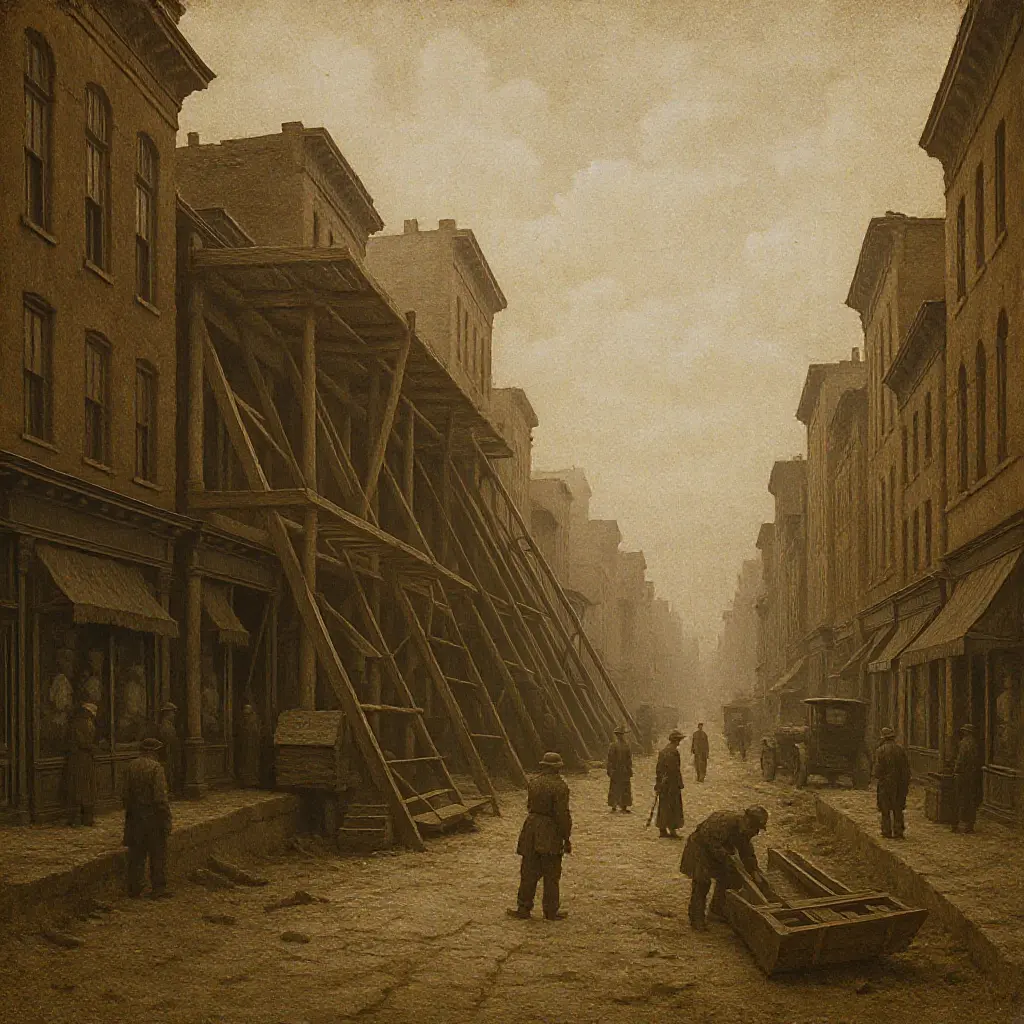
The truth is less “lost golden age” and more “zoning board meeting minutes from 1883.” You think an empire was lost? No, it was just Carl in 1883 arguing for three hours about sewer pipe diameter until everyone else agreed just to make him stop. There is no apocalypse, only men in hats arguing about infrastructure until someone passes out from boredom.
Architecture? Global style trends. Those giant doors weren’t for giants—they were intimidation architecture. You walk into court and think, “Oh, right. The state is huge. I am small. Guess I’ll pay that parking ticket.”
World’s Fairs? They weren’t ancient cities. They were plaster-and-wood stage sets, buildings designed like puff pastry: layer after layer, flaky, and doomed in the rain. Imagine Dave showing up with his tuna sandwich, marveling at the majestic “White City,” not knowing that by fall, the whole thing would be architectural slush.
The Mud Flood? Urban geology. Streets rise. Basements become ground floors. It’s boring, but it’s true. Dave survived the mud flood, by the way, but only because his sandwich was so dry the mud refused to touch it.
Free Energy? Lightning rods. That’s it. Nothing more.
The Orphans? Tragic social policy. Documented. Traumatizing. Not humanity 2.0.
Conclusion: Why Do We Care?
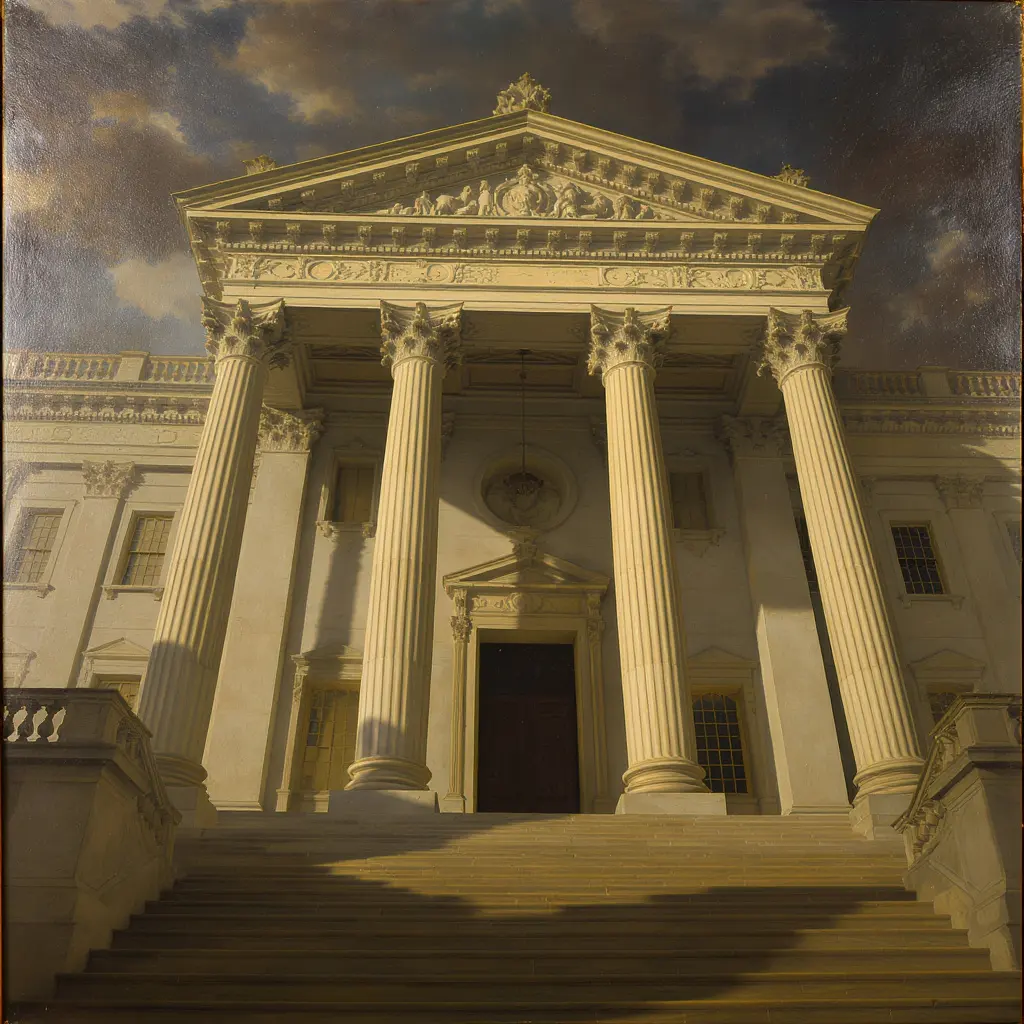
So why does this weird theory stick? Because modern architecture can be deeply depressing. Every WeWork looks like a corporate fish tank where ideas go to suffocate slowly under fluorescent light. We went from domes and gargoyles to glass boxes that seem designed to make you have a quiet existential crisis on your lunch break.
Tartaria gives us a prettier story: we once lived in palaces powered by free electricity until evil controllers took it all away and gave us strip malls with a Subway in them. One says, “Pinnacle of civilization.” The other says, “Extra mayo is 75 cents.” And beyond that, it’s community. A global puzzle hunt where you can’t lose. Every basement window is a clue. The search itself is the point.
You don’t need more almonds. But you do need a dome.
But the truth? Those twelve-foot doors weren’t for giants. They were for us—normal-sized, anxious, almond-buying humans who wanted to feel important. So yes, we built the domes. Us. Normal people. Which is terrifying, because it means we could also build the strip mall with the Subway. And that, my friends, is the real tragedy.
Still hungry for receipts? Start with Why Three Centuries Aren’t Missing, peek at Báthory: Science vs. Myth, and doom-scroll our Field Notes. If your personal matrix keeps flickering, signal it with The Simulation Is Gaslighting Me, flex your skepticism with Mild Temporal Anomaly, or go full cosmic with The Moon Owes Me Twenty Dollars.