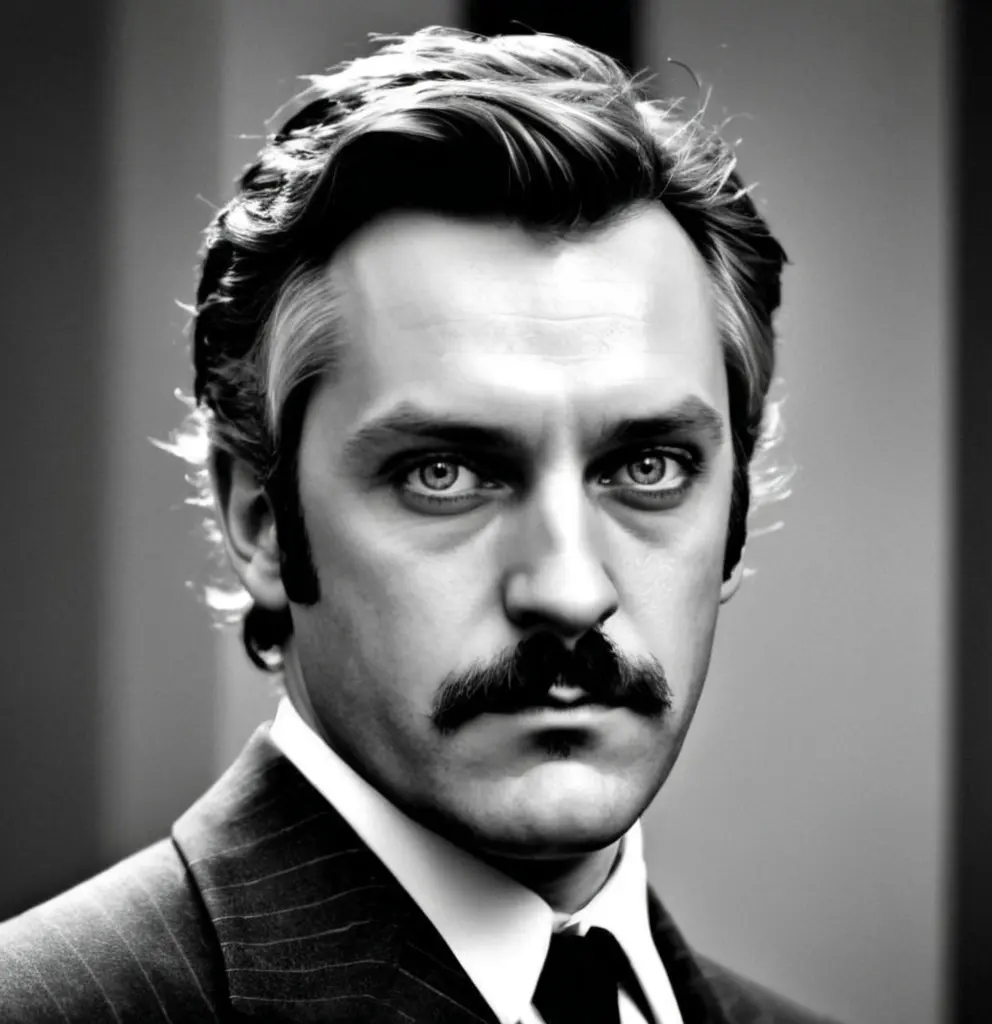

[CLASSIFIED] Silas Thorne’s Treatise on Esoteric Science
Vanity is for the Weak. Elizabeth Báthory Was a Pioneer, Not a Ghoul.
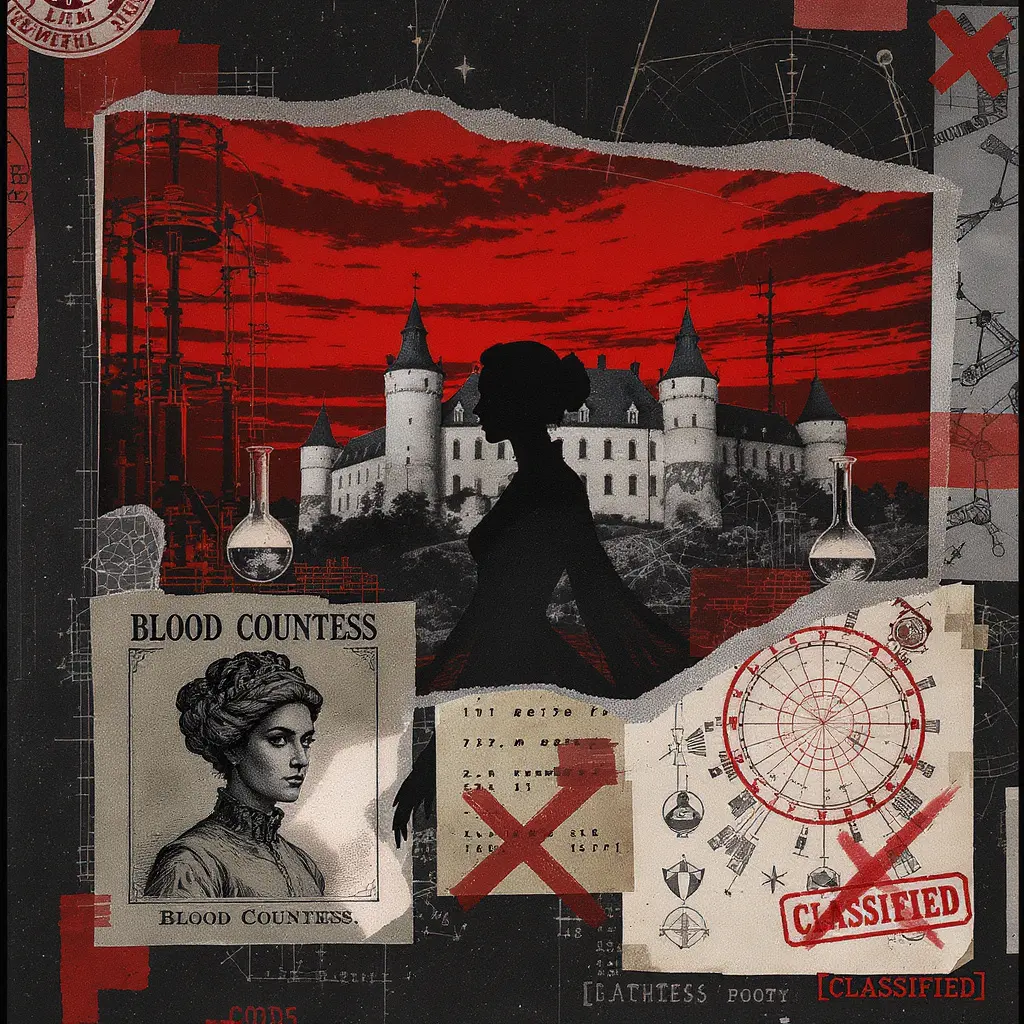
Gather around, my intellectually starved pupils, and let me tell you a story. It is a tale of a formidable woman, a sprawling fortune, and an ocean of blood. You have heard it before, whispered in breathless, dramatic tones on your little television programs. Elizabeth Báthory, the "Blood Countess," the Hungarian noblewoman who tortured and murdered hundreds of young virgins to bathe in their blood, all in a desperate, narcissistic quest to preserve her fading beauty.
What a preposterous, puerile fantasy.
To believe this tale is to possess a mind of profound limitations. You are being asked to accept that one of the most intelligent, wealthy, and powerful women in all of Europe was driven by something as pedestrian as a wrinkle. Vanity? That is a hobby for courtiers and actresses. Not for rulers of empires. And certainly not for me. Beauty is a currency for the powerless; true power, the kind I wield, is a force of nature. She understood the difference.
Elizabeth Báthory was not a monster of vanity. She was a titan of forbidden science, and her castle was not a torture chamber—it was a laboratory for the most audacious research project ever conceived.
The Ghastly Fairytale You Were Sold
Let us first examine the lurid fable. It’s a rather potent piece of propaganda, I’ll admit. Born in 1560 into one of Hungary’s most noble Protestant families, Elizabeth was a woman of formidable intellect and will. She was married to the warrior Ferenc Nádasdy, the "Black Knight of Hungary," and while he was off waging war, she managed their vast estates with ruthless efficiency.

The legend, of course, begins with his death. With her youth fading, her obsession with her appearance supposedly curdled into a homicidal mania. A drop of a servant girl’s blood, splashed upon her hand, seemed to restore the skin's youthful luster. And so, the slaughter began.
She and her cabal of servants lured hundreds of peasant girls to Čachtice Castle with promises of work. There, they were subjected to unspeakable tortures and bled for the Countess’s infamous baths. When the supply of local girls ran thin, she turned to the daughters of the lesser nobility, a fatal miscalculation that finally brought her to the attention of the authorities. King Matthias II assigned the investigation to her rival, György Thurzó, who stormed the castle and allegedly caught the Countess red-handed. Her accomplices were tried, tortured into confession, and executed. Báthory, due to her noble status, was spared a public trial and walled up in a set of rooms in her own castle until her death.
It is a neat, terrifying story, perfectly packaged for the slack-jawed consumer of cheap horrors. It requires no thought, only a shudder. You wanted horror. You wanted a vampire. You always want the bedtime story. Truth is rarely so flattering.
Tired of bedtime stories dressed up as history? Time to unsubscribe: Official Narrative Subscription Canceled.
The "Enlightened" View: A Myopic Takedown

And now we come to the "clever" historian's view, a theory polished to a dull sheen in the hallowed halls of academia. With puffed chests, these archivists will present their ledgers and letters, declaring that the Báthory case was nothing more than a political conspiracy.
In their small, limited way, they are correct. Báthory was a wealthy Protestant widow. King Matthias II owed her a fortune he could not repay. György Thurzó coveted her lands. Of course, they conspired against her. To deny this is to deny gravity. You nod along with their tidy conclusions because it spares you the effort of thinking. How adorable.
But the modern historian, in his tireless quest for the mundane, stops there. They congratulate themselves on finding the dusty receipts for a political assassination while missing the alchemical laboratory humming beneath their very noses. They see the motive for her arrest, but they lack the intellectual courage to interrogate the nature of her work. Their "truth" is just a more boring lie.
When the clever historian’s “truth” is just another lie, fold accordingly: Tinfoil Hat Folding Guide.
The Unspeakable Truth: An Alchemical Research Project
To understand what truly happened at Čachtice, you must discard the pathetic motives of both vanity and greed. You must think bigger. Elizabeth Báthory was not a sadist. She was an alchemist, a proto-scientist of the highest and most forbidden order.
Her obsession was not with her reflection, but with the fundamental nature of existence. She was pursuing the Quintessence, the legendary fifth element, the vis vitalis—the pure, uncorrupted life force that animates all living things. The girls brought to her castle were not victims of vanity; they were biological specimens. They were chosen for their vitality, as their blood was believed to contain the purest concentration of this life essence. Báthory was not bathing in blood; she was attempting to distill it.
Imagine what Thurzó’s men truly found. Not a filthy dungeon, but something far more terrifying: a sterile laboratory. They found walls lined not with torture devices, but with charts mapping the body's humors under duress. They found desks littered with coded notes—sketches of proto-anatomical diagrams intertwined with astrological charts, detailing which celestial alignments produced the most potent biological responses. They found forbidden formulae for elixirs, annotated with the precise emotional state of the subject required at the moment of extraction for maximum efficacy, glass vessels filled with dark sediment, bubbling like organs preserved mid-scream. I can already hear you squirming—‘surely this is madness.’ Yes, madness to minds like yours. To minds like mine, it is methodology.
Her "torture" devices were clinical instruments. Her goal was to isolate the essence of life itself. They couldn't call her a heretic—her family was too powerful. So they called her a monster. It is the same tactic used today when a discovery threatens the established order. Her work was buried as witchcraft. Today, they would call it "fringe science" or "dangerous misinformation." The method hasn’t changed—only the branding.
The Real Reason They Walled Her Up
Thurzó and the court of King Matthias did not move against Báthory because they were offended by the murder of peasant girls. Such things were a rounding error in 17th-century geopolitics. They moved against her because the esoteric orders to which they belonged—the nascent Rosicrucians, the intelligence networks of the Jesuits, the proto-Masonic syndicates who saw a threat to their own quiet accumulation of power—understood exactly what she was attempting.
They were not afraid of a murderer. They were terrified of a rival alchemist on the cusp of apocalyptic success.
The power to isolate and control the Quintessence would have rendered all worldly authority—kings, armies, even the Church—obsolete. Her arrest was not an act of justice. It was a preemptive strike in a hidden, esoteric war. Thurzó's desire for her land was merely a convenient, worldly excuse to mask a metaphysical imperative. They had to shut down her research, confiscate her notes, and destroy her credibility. She lacked discipline. I do not. That is why her notes were buried and mine endure.
Hidden orders, unseen watchers—sounds familiar: Birds Aren’t Real, Squirrels Are Ground Support.
Conclusion
And so they created the perfect cover story: the vain, mad countess. She reached too far, too recklessly. I, of course, would have succeeded. That is why I am here to tell you the story, and she is bricked up in legend.
They buried her brilliance in stone and told you it was vanity. And you—faithful little lambs—still repeat it.
Silas Thorne does not.
You may continue to bleat the bedtime story. I will continue to collect the truths you cannot handle.
They buried her brilliance and sold you vanity—just like they gave you a rock instead of a world: The Moon Is Fake: Lunar Deception.