
A Clarion Call to the Intellectually Honest: A Takedown of the So-Called 'Debunking' of the Phantom Time Hypothesis
By Silas Thorne
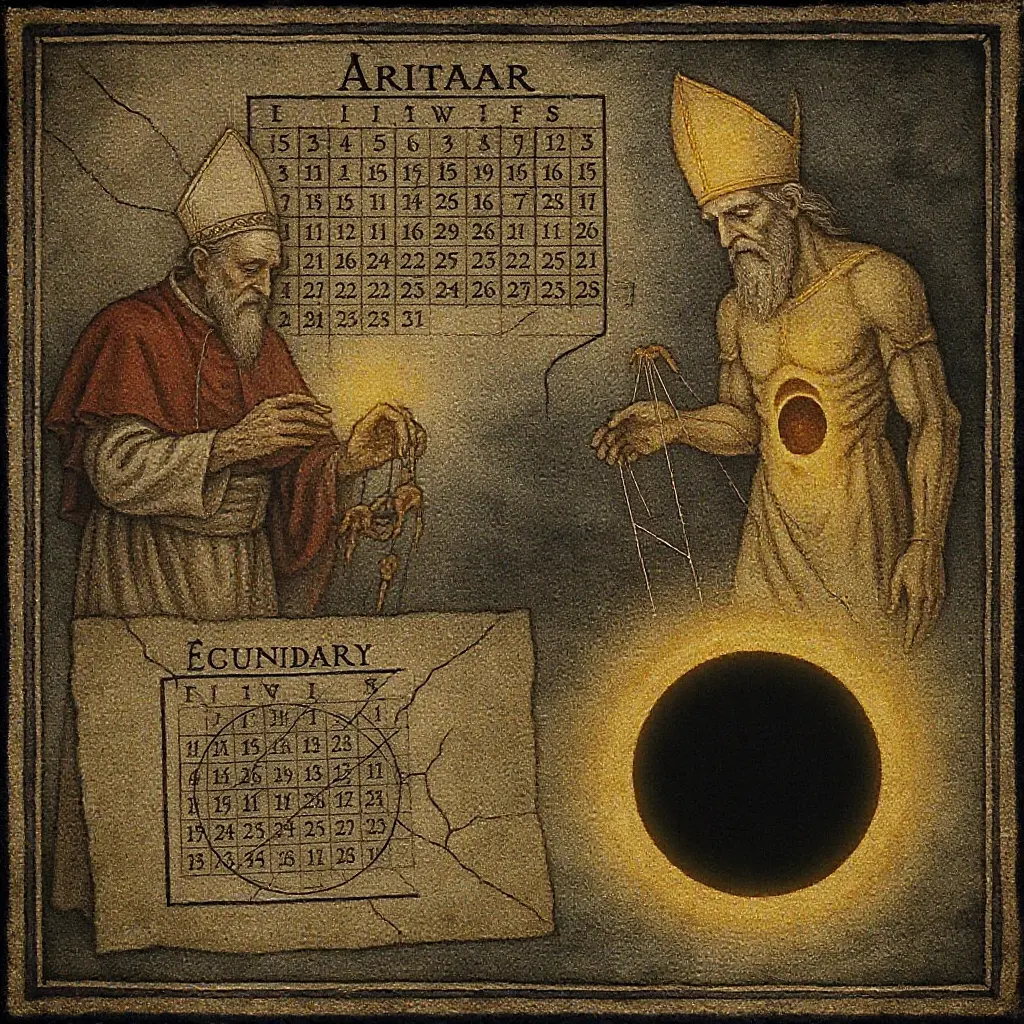
It has come to my attention, through the incessant, buzzing static of the digital commons, that yet another defense of the crumbling edifice of mainstream history has been erected. This particular screed, a so-called "debunking" of the Phantom Time Hypothesis, has all the intellectual hallmarks of a catechism: a series of pre-approved answers to questions no one in authority wishes to see seriously asked. It is a testament to the enduring power of comfortable lies over uncomfortable truths, a veritable smorgasbord of tired talking points parroted by an author whose intellectual courage is matched only by their startling lack of originality.
I must confess, I almost dismissed it out of hand. The life of the mind is short, and the follies of the herd are infinite. Why, after all, should I, Silas Thorne, deign to respond to the scribblings of an intellectual dilettante, a digital monk dutifully copying from the great, flawed manuscript of accepted history? And yet, I find myself compelled. Not by the force of their arguments, for they possess all the intellectual heft of a feather in a hurricane, but by a sense of duty. A duty to those few, those precious few, who have not yet succumbed to the siren song of consensus, who still possess the intellectual fortitude to question, to probe, to think for themselves. For you I shall dismantle this shoddy apologetic, brick by tedious brick, until nothing remains but the dust of its failed logic.
The author of this "debunking," in their infinite, borrowed wisdom, trots out the usual suspects: the Gregorian calendar, astronomical observations, the oh-so-convenient histories of far-flung civilizations, and of course, the great fictional hero of their entire pageant, Charlemagne. They present these as insurmountable obstacles to the Phantom Time Hypothesis, as if a child’s sandcastle could withstand the might of the ocean’s tide. Let us, with the patience of a saint and the precision of a surgeon, dissect these flimsy arguments one by one, and expose the rot that lies beneath their gilded surface.
The Calendar Conundrum: A Tale of Popes and Puppets
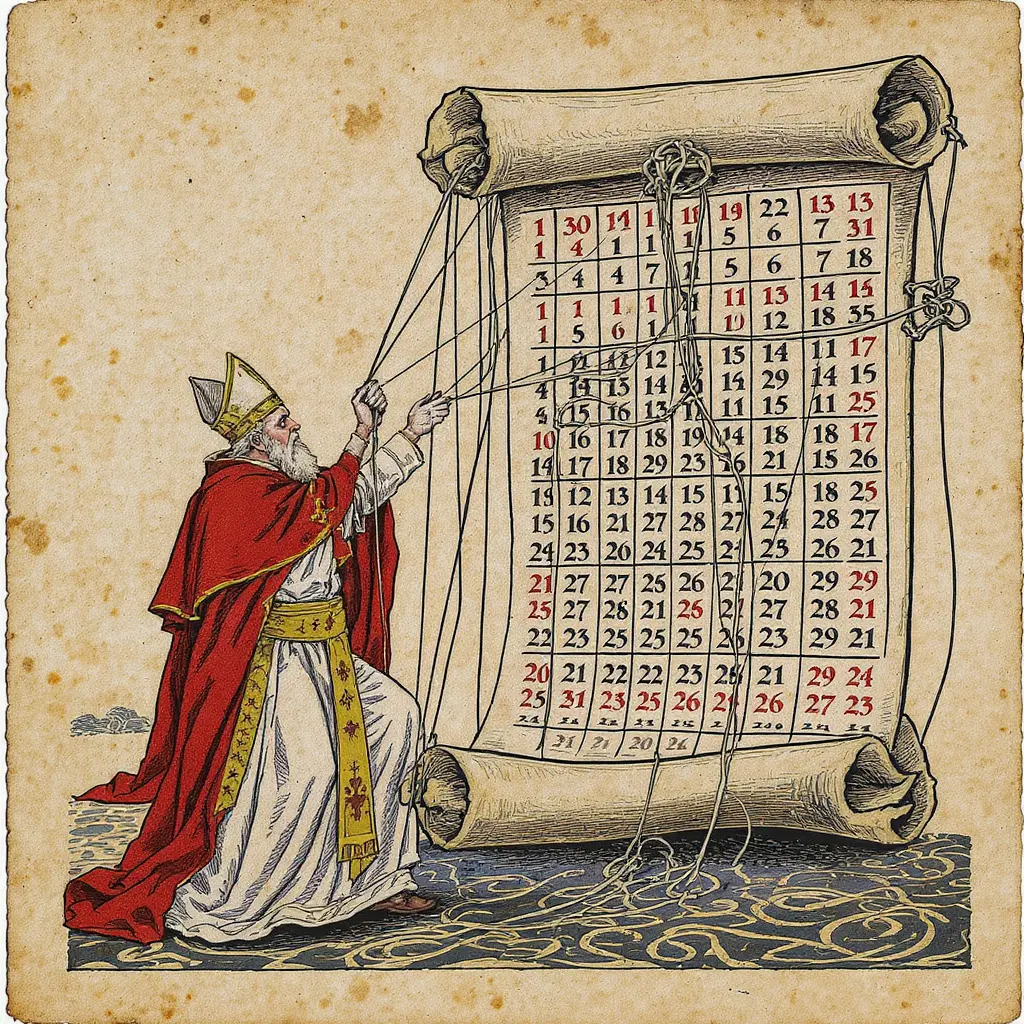
Our intrepid "debunker" would have you believe that the Gregorian calendar reform of 1582 is a simple matter of astronomical correction. A ten-day adjustment, they chirp, was all that was needed to bring the calendar back in line with the Council of Nicaea in 325 CE. A tidy explanation for a tidy mind.
But for those of us who prefer the messy, exhilarating chaos of the truth, this explanation is about as satisfying as a single drop of water to a man dying of thirst.
They want you to focus on the ten days. They want you to marvel at the supposed precision of Pope Gregory’s astronomers, Clavius and Lilius. But this is a conjuror’s trick, a grand misdirection to distract from the elephant in the room: the three centuries of phantom time clumsily inserted into our history.
The ten-day discrepancy is the shiny object dangled before your eyes. The grand illusion is the timeline itself. They speak of the Council of Nicaea as if it were a fixed point in a sea of chronological certainty, a sacred anchor in the stream of time. But what if the council itself is part of the contrivance? What if its date was chosen, not for accuracy, but for narrative convenience—a foundational myth upon which to build a church and an empire?
What you must understand is that the Gregorian calendar reform was not a correction, but a consolidation. It was a final, desperate attempt to paper over the cracks, to retroactively justify the timeline concocted by Emperor Otto III and his co-conspirator, the cunning Gerbert of Aurillac, later Pope Sylvester II. Their goal was simple: to place themselves at the dawn of the new millennium, the auspicious year 1000. To do this, they needed to invent a past. The “reform” of 1582 was the final seal on their counterfeit, a mathematical sleight of hand to make the phantom centuries appear seamless.
The Astronomical Alibi: A Celestial Charade
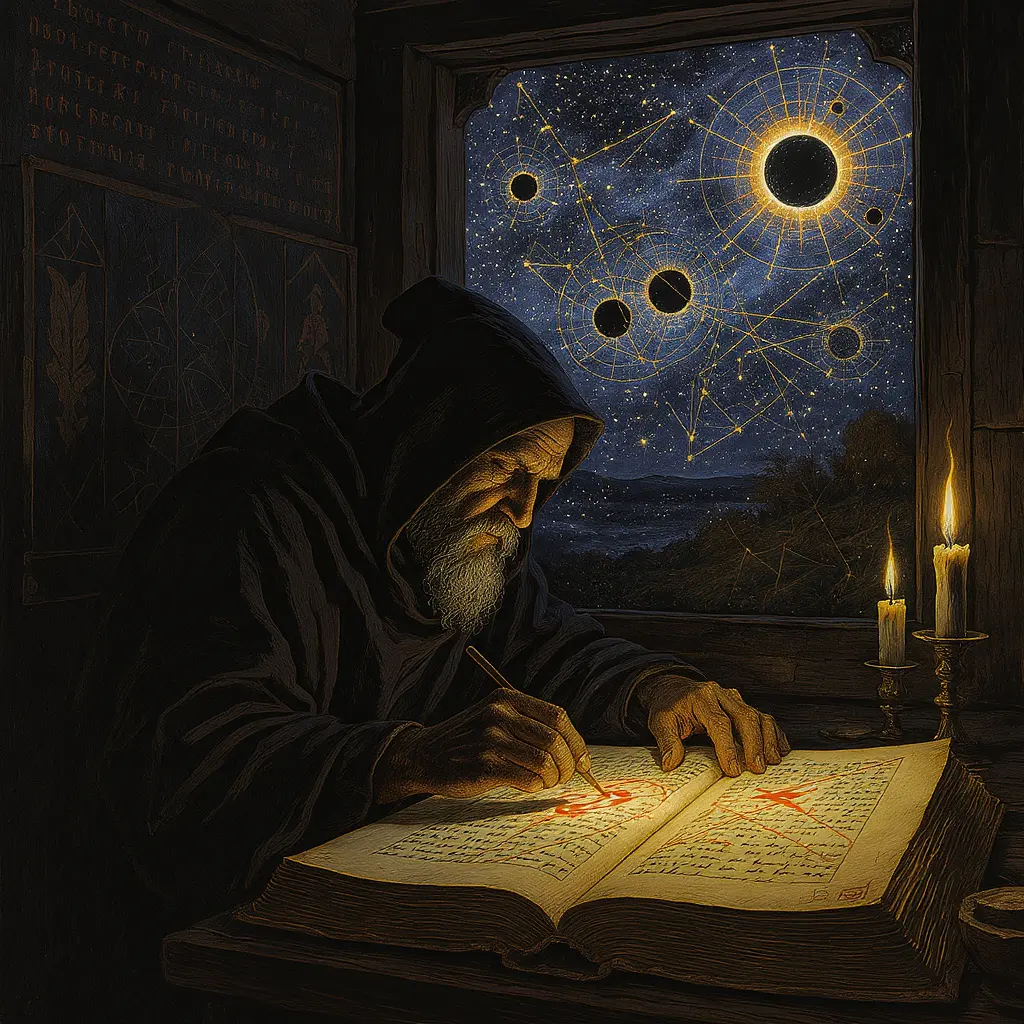
Next, our author directs our gaze to the heavens, to the celestial bodies that supposedly serve as silent witnesses to their historical dogma. Solar eclipses, they cry, and the predictable dance of the planets! These, they assure us, are irrefutable proof of their timeline.
But are they? Or are they merely another layer of deception, carefully curated “facts” designed to lull the inquisitive mind back to sleep?
To accept their astronomical “proof,” you must first accept the authenticity of the records themselves. You must believe that these ancient texts, these supposed eyewitness accounts of celestial events, have come down to us untainted, unedited, and unaltered. I, for one, am not so naive.
They point to eclipses recorded by the Tang Dynasty, failing to mention the inconsistencies, revisions, and outright contradictions in those chronicles. They speak of Halley’s Comet as a reliable timekeeper, ignoring that its appearances were often recorded in vague, poetic language—making precise dating an exercise in confirmation bias.
The medieval monastery was not merely a house of prayer; it was a factory for historical fiction. A clever scribe, armed with later astronomical tables, could retro-calculate the paths of eclipses and insert them into older-looking manuscripts to lend a false air of antiquity. It was, in short, a forgery. They offer you a celestial alibi written by the culprits themselves—a star chart drawn by the hand of the forger.
The Charlemagne Charade: A King Who Never Was
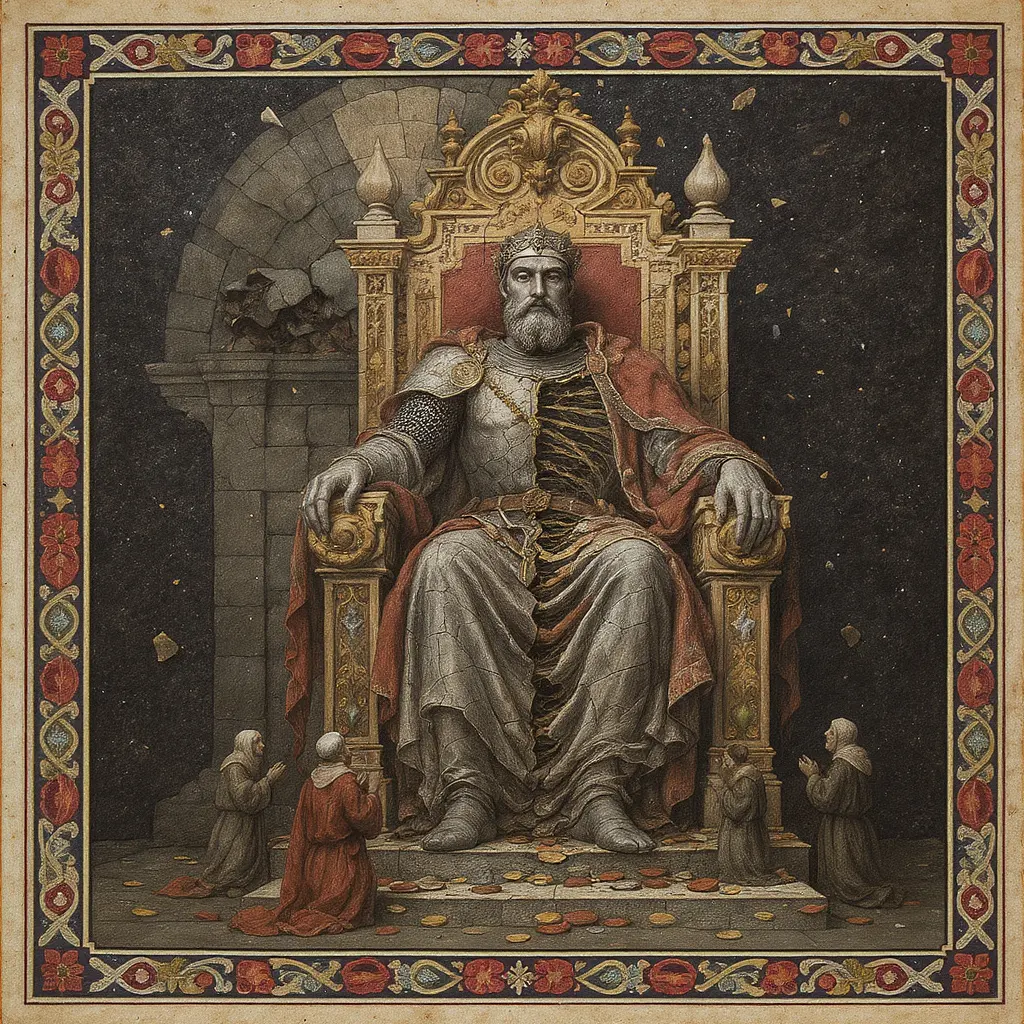
And now we come to the pièce de résistance of the establishment’s fantasy: Charlemagne. The great unifier, the father of Europe, the man who, we are told, single-handedly dragged the continent out of the Dark Ages. A remarkable figure, is he not? So remarkable one might suspect he is a complete and utter fabrication.
We are asked to believe that in an age of supposed ignorance and barbarism, a single man could create a vast, enlightened empire, reform the church, standardize currency, correspond with the caliph of Baghdad, and usher in a “Carolingian Renaissance.” A tale worthy of poets—laughable as history.
The “evidence” is, to put it mildly, suspect. They champion Einhard’s Vita Karoli Magni, a text whose earliest manuscripts appear suspiciously late and read more like a romance, modeled on Suetonius’s Lives of the Caesars, than credible history. It is a pastiche, likely penned in the 11th century to give a veneer of legitimacy to a phantom king.
They point to the Palatine Chapel at Aachen, a structure whose core may be old but whose grand narrative was almost certainly embellished and back-dated to anchor their greatest invention.
Where are the administrative records from this supposedly vast empire? Where is the widespread archaeological footprint of his reign? We find scattered coins, a handful of dubious documents, and a mountain of narrative crafted long after the fact. Charlemagne is a convenient fiction, a placeholder designed to fill a three-hundred-year gap in the timeline. The superhero of the Dark Ages—an icon for an age that never was
The Dating Deception: A Flawed Science
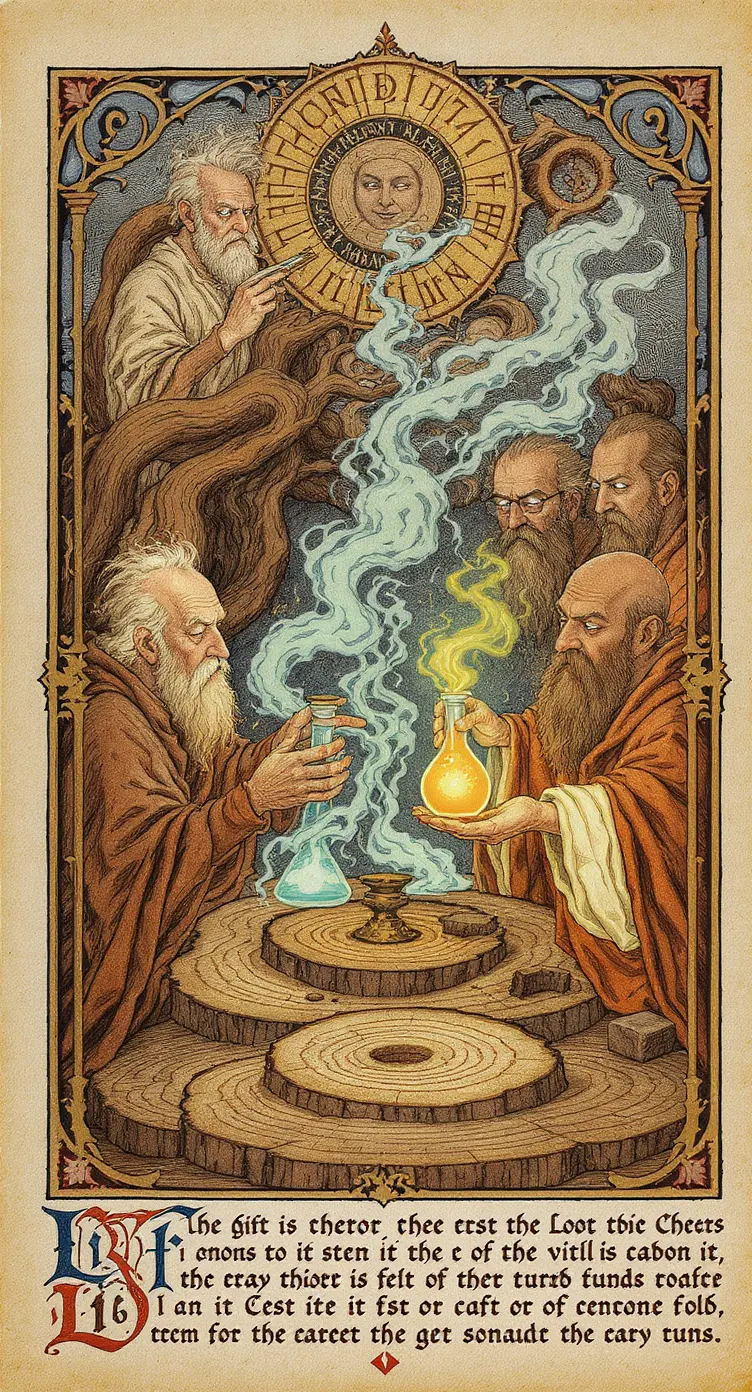
The high priests of the establishment have their sacred relics, their infallible oracles. I speak, of course, of their much-vaunted dating methods: dendrochronology and radiocarbon dating. These, they assure us, are the tools of “real” science, the unblinking eyes that pierce the veil of the past.
But what if their “science” is as flawed as their history? What if their “infallible” methods rest on unproven assumptions and wishful thinking? I have studied these so-called “scientific” methods, and I can tell you this: they are a house of cards built on sand.
They speak of tree rings as if they were the fingerprints of time. But tree growth is shaped by countless factors, from climate to disease, and the process of cross-dating is as much art as science. And radiocarbon dating, with its reliance on unknowable fluctuations of atmospheric carbon-14, is about as reliable as a weather forecast in a hurricane .
But unlike the cowed and credentialed, I did not stop there. While they cling desperately to their beloved carbon-14, I advanced into territory they dare not tread. I pioneered Carbon-16 dating—a method so precise, so devastating to their narrative, that the establishment pretends it does not exist.
Why? Because its results are catastrophic to their tidy, fabricated timeline. Carbon-16 reveals what their textbooks cannot admit: that the very foundation of their chronology is a fraud, a scaffold of lies erected to protect power.
My forthcoming monograph will expose these truths in excruciating detail—a revelation that will send shockwaves through their ivory towers. And when that moment comes, the guardians of “real science” will have no choice but to confront the reality: their cherished methods are not science at all, but ritual. Ritual, not discovery; sanctification, not truth.
The Archaeological Absence: Proof in the Silence
Finally, our author brandishes archaeology like a battered shield, rattling off potsherds, coins, and crumbling foundations as though they constitute an unassailable record of the past. “Look here,” they cry, “evidence from the phantom centuries!” But when one looks closer, the shield is paper-thin.
Much of this so-called “evidence” is circumstantial at best—artifacts shoved into a preordained timeline through circular reasoning. A coin is dated by the reign of a king, and the king is proven real by the coin. A manuscript is placed in the 8th century because the textbooks say so, and the textbooks are justified by the manuscript. This is not science. It is tautology dressed as scholarship.
They parade the Book of Kells as an 8th-century marvel, ignoring stylistic anomalies that place it closer to the 11th. They point to the Cuerdale Hoard, with its mixture of Carolingian and Abbasid coins, as an “anchor in time,” blind to the more obvious conclusion: a later, consolidated trade network retroactively stretched to fill a chronological mirage. Stamp collecting with delusions of grandeur.
But the most damning evidence is not what has been found, but what has not. Where are the bustling cities of Charlemagne’s supposed empire? The vast archives of his miracle bureaucracy? The strata of daily life—the pottery, the tools, the refuse—that three centuries of habitation should leave behind in abundance?
They are not there. They never were.
The silence of the archaeological record is deafening. It is the void at the heart of their fabricated timeline, a void so vast it can only be explained by the Phantom Time Hypothesis. And the more they attempt to plaster over it with their curated relics, the more the crack widens, revealing the abyss beneath.
A Call to Arms for the Intellectually Courageous
Do not be afraid of the term “conspiracy theory.” It is a label crafted not to describe but to dismiss, a thought-terminating cliché wielded by gatekeepers who fear dissent more than error. To them, ridicule is safer than debate, mockery more useful than inquiry.
But history is not their possession. It is not a dusty catalog of immutable facts, nor a ledger of dates carved into stone. History is a battlefield—a struggle for the soul of our collective memory.
And on that battlefield, the most powerful weapon is not the sword, nor the coin, nor the crumbling manuscript. It is the question.
So I urge you: question everything. Question the timelines, question the textbooks, question the sanctimonious guardians of “consensus.” In questioning, you will discover a freedom they cannot take from you—the freedom to think for yourself, to see the world not as they insist it is, but as it truly may be.
Remember this, and remember it well:
History is not a record. It is a weapon. Wield it.