
The Future Was Yesterday (And Apparently, It Was Cheaper)
Alright, picture it. It’s Tuesday. You’re standing at a gas station, watching numbers spin faster than a cartoon character's legs. You’re paying a genuinely upsetting amount of money to fill your car with the liquid remains of dinosaurs so you can drive to a job you’re late for. Your phone is at 4% battery. You have one of those portable chargers, but you forgot to charge the charger. It's the modern equivalent of having a spare tire that is also flat.
You just stand there, in the cold, smelling gasoline, and a thought drifts into your head: “Does it have to be like this?”
And if you’re up at 2 a.m. and you type that question into the internet, oh boy. You will find a whole group of people who will tell you, with the furious confidence of a man explaining the plot of Inception to you at a party, “NO! It does not have to be like this! We were supposed to have cars that run on water! We were supposed to have free, wireless electricity! We were supposed to cure cancer with a fancy lamp! But THEY took it all away from us.”
Who’s “they”? Oh, you know. They. The big guys. The oil barons, the bankers, the doctors who get a little too excited about prescribing things. A shadowy cabal of powerful men in smoke-filled rooms who operate under the official name of “The Committee for Keeping Things Expensive and Annoying.”
This is the myth of Suppressed Technology. It’s the idea that the world we live in isn’t the pinnacle of progress. It’s the bargain-bin version. We’re running on dial-up in a fiber-optic world. And it’s all because a handful of geniuses in the early 20th century solved all of our problems, and the world’s most powerful people looked at their inventions and said, “This is amazing. Now, let’s bury it in the desert and never speak of it again.”
Part 1: The Island of Misfit Geniuses
The story has a few main characters. They’re like the Avengers, but for inventions that would have made our lives way, way better.
First, you have their Captain America: Nikola Tesla. The Patron Saint of “What If?” In the conspiracy world, Tesla wasn’t just an inventor; he was basically a wizard who accidentally wandered into the Industrial Revolution. He had a plan for global, wireless electricity. He built a giant tower on Long Island called Wardenclyffe, which was supposed to be a global Wi-Fi router, but for electricity. You wouldn’t plug your lamp into the wall. Your lamp would just… have power. All the time. For free. Because the electricity would be in the air. Like pollen, but useful.
He was going to shoot electricity through the ground, through the air, he had an earthquake machine, he had a death ray… the man was busy. He was living in the year 3000 while everyone else was still figuring out how to not die of a cough. And his big benefactor, the banker J.P. Morgan, came to him and asked, “Mr. Tesla, this is all very impressive. But where do we put the meter?” And Tesla, sweet, naïve Tesla, was like, “Oh, there is no meter! It’s for everyone!” And J.P. Morgan was like, “Riiiiight. Hey, I just remembered I have to, uh, go defund this entire project. Immediately.”
Then you have Royal Rife, the guy with the magic microscope and the cancer-killing radio. The story goes that in the 1930s, Rife built a microscope so powerful it could see living viruses, which was a big deal. Then he built a machine—basically a fancy radio that glowed purple—that could shoot frequencies at these viruses. He claimed that every disease had a specific frequency, and if you beamed its own frequency back at it, it would shatter, like an opera singer breaking a wine glass.
He said he cured, like, 16 terminally ill cancer patients by basically pointing a lamp at them for a few minutes a day. And the American Medical Association, instead of throwing a parade, was like, “Hold on a minute. A cure for cancer that’s just… a radio frequency? And it doesn’t cost a hospital visit and your entire life savings? We have… concerns.”
And finally, you have The Water-Powered Car Guy. Every town has one. He’s always named Stan. He’s a guy in a garage who figured out how to run a Ford Pinto on tap water. He was about to change the world, but then two men in black suits showed up, bought his patent for a dollar, and told him to forget he ever invented it. Or his workshop “conveniently” burned down, taking all his notes with it. Stan is the underdog. He’s the local hero who proves this isn’t just about legendary geniuses; it’s about every little guy with a big idea.
Part 2: The Villains, or, The Committee for Keeping Things Annoying
So why would anyone suppress these world-changing inventions? The theory isn’t that they were evil, mustache-twirling villains who just hate progress. No, it was much more boring and, frankly, more believable: it was just business.
Imagine you’re a powerful industrialist in the early 1900s. You’ve just spent the modern equivalent of a gajillion dollars building oil pipelines, copper mines, and giant power plants with big, beautiful, profitable meters on them. Your whole business model is based on digging something up, shipping it somewhere, and charging people to use it.
Then Nikola Tesla, a man who looks like a vampire who’s very good at math, walks in and says, “I’ve done it. I’ve figured out how to give everyone on Earth limitless energy for free by harnessing the power of the planet itself.”
You don’t say, “Hooray for humanity!” You say, “Get this man out of my office before he bankrupts a dozen of my industries.” Free energy is a terrible business model. Curing diseases with a radio is a terrible business model. A car that runs on water from your garden hose? The absolute worst business model.
So they had a few methods for dealing with these… disruptions.
Discredit Them: This is the bad Yelp review campaign. “Oh, Royal Rife? I hear his machine gives you a weird rash. And his science is… shaky. Five stars for effort, one star for execution.”
Buy and Bury: They’d buy the patents for these incredible inventions and then lock them in a vault. It’s the corporate version of buying a really good toy just so your little brother can’t play with it.
“Accidents”: Suddenly, a genius’s lab would catch fire. An “unfortunate electrical problem.” And wouldn’t you know it, the only things that burned were the prototype and all the research notes. A real shame. Happened three times. Very clumsy, these geniuses.
Part 3: Reality Check (Now with More Auditing)
Okay, so let’s get into the boring, buzzkill part: reality. The truth is less about a shadowy cabal and more about the three things that kill every cool idea: physics, money, and paperwork.
Tesla was a genius, but a terrible businessman who overpromised. He was brilliant. But his idea for global wireless power ran into a little problem called the inverse-square law. The further you get from a power source, the weaker it gets, exponentially. Powering a lightbulb across the room is one thing; powering a city across the continent is another. His tower couldn’t have worked the way he dreamed. He was a visionary who was also terrible with money and often promised investors things that physics itself was not prepared to deliver.
Rife’s claims were never proven. The story of the 16 cured cancer patients? It comes from a single source, years after the fact, with no verifiable medical records. No one has ever been able to replicate his results in a controlled, peer-reviewed study. Modern medicine is built on the scientific method, which is less exciting than a magic death ray, but has the advantage of actually working consistently for millions of people.
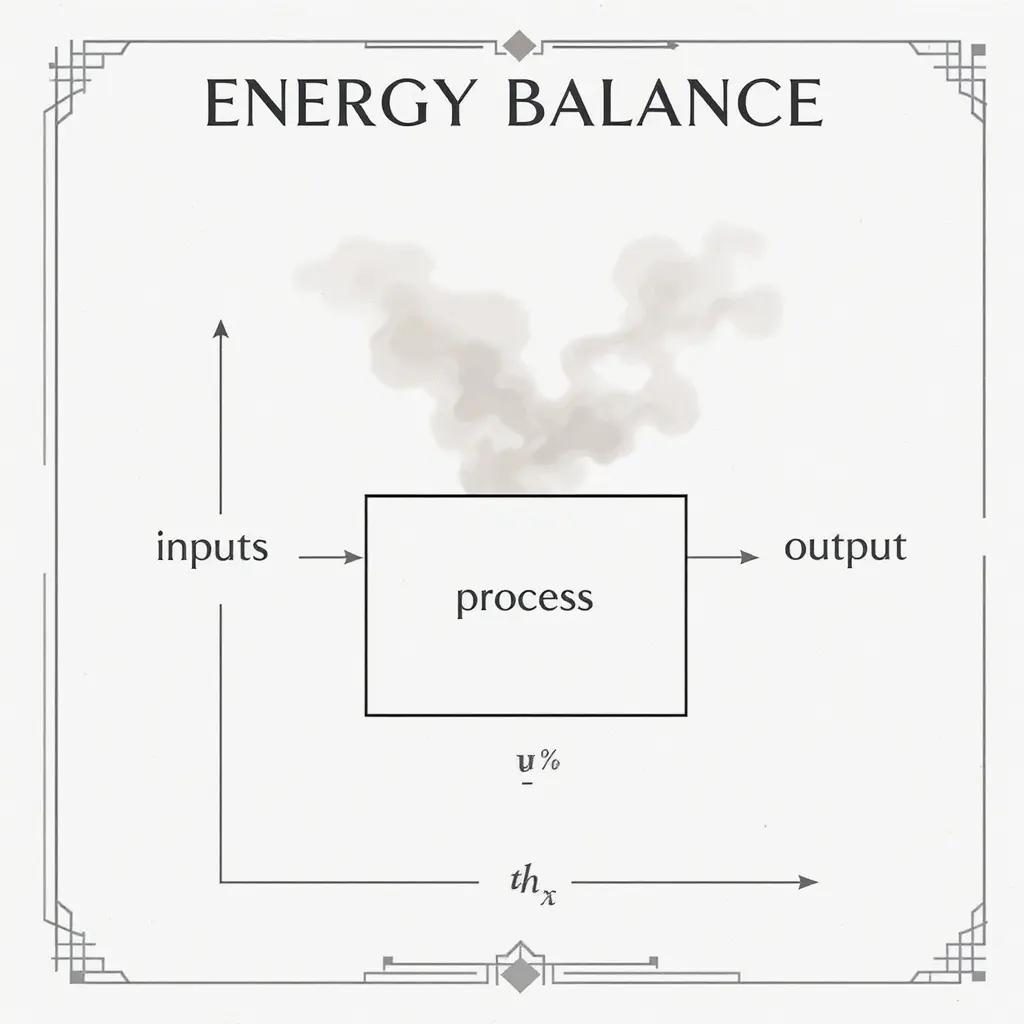
And the water-powered car? This one runs into the laws of thermodynamics, which are like the bouncers of the universe; they are very strict and they do not negotiate. It takes more energy to split water into hydrogen and oxygen than you get back from burning the hydrogen. A car that runs on water is like trying to lift yourself off the ground by pulling on your own shoelaces. It’s a perpetual motion machine, and physics finds that very, very funny.
The truth isn’t a conspiracy. It’s just that science is hard, engineering is expensive, and sometimes, brilliant people are wrong.
Conclusion: So Why Do We Want to Believe?
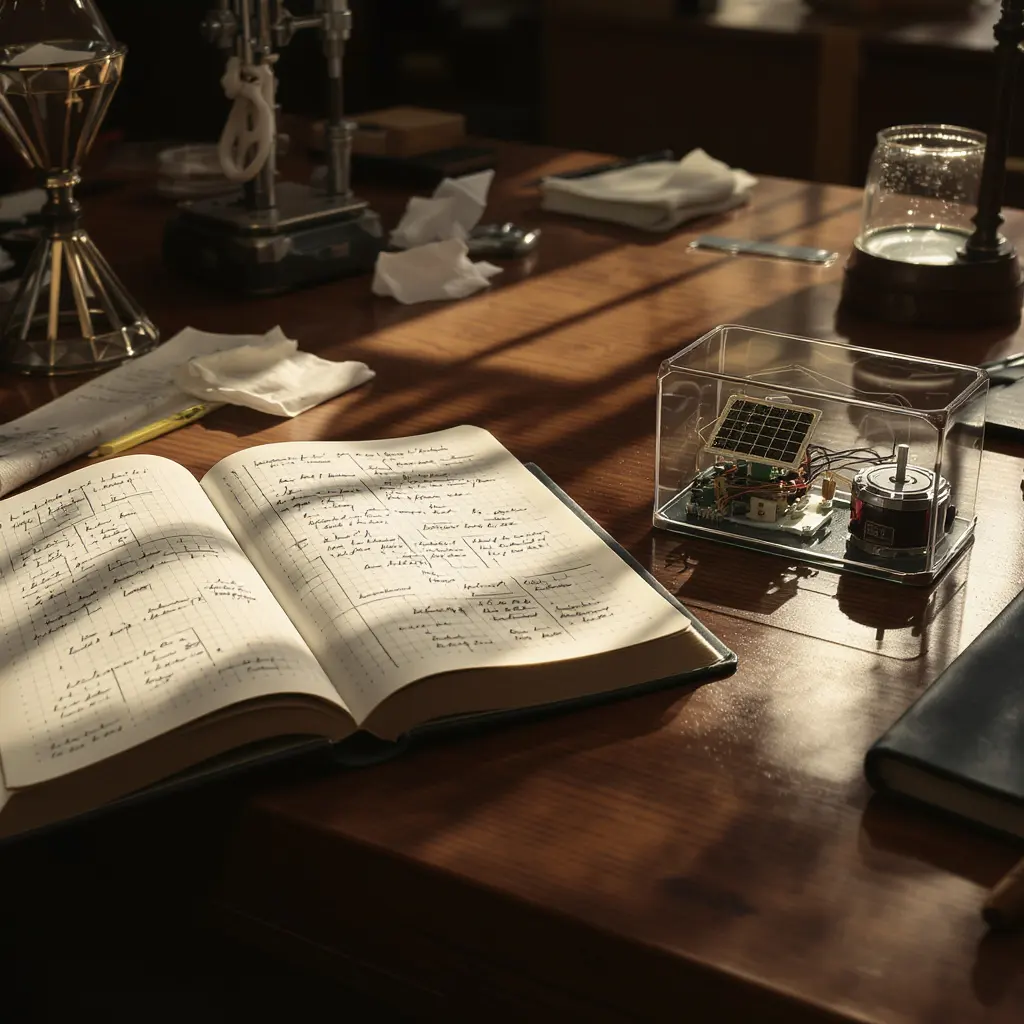
So why does this myth stick around? Because it’s a story about hope. It’s a simple, beautiful narrative where a few brilliant heroes fought a few greedy villains, and the good guys almost won. And maybe, just maybe, their secret plans are still out there in a dusty old notebook, waiting for us to find them.
We want to believe because our world is full of annoying, expensive problems. Your phone is dead. Gas is expensive. Your internet is slow. The idea that all of this is an artificial struggle—that a better, easier, cheaper world was stolen from us—is way more comforting than the alternative. The alternative is that this is just the best we’ve been able to do so far, and progress is slow, messy, and complicated.
It replaces the chaos of history with a simple story. It’s not that thousands of scientists and engineers have been working for a century on incremental improvements. No, it’s that one guy figured it all out, and a few bad men hid it. It’s a much easier story to tell.
So the next time your phone dies at the worst possible moment, you can look up at the sky and curse J.P. Morgan for stealing your free air-electricity. Or, you can accept that you watched six hours of TikToks and forgot to plug it in. One of those is a much better story. The other one is probably what happened. And hey, at least you don't have to explain to Stan why his water-car keeps rusting.