
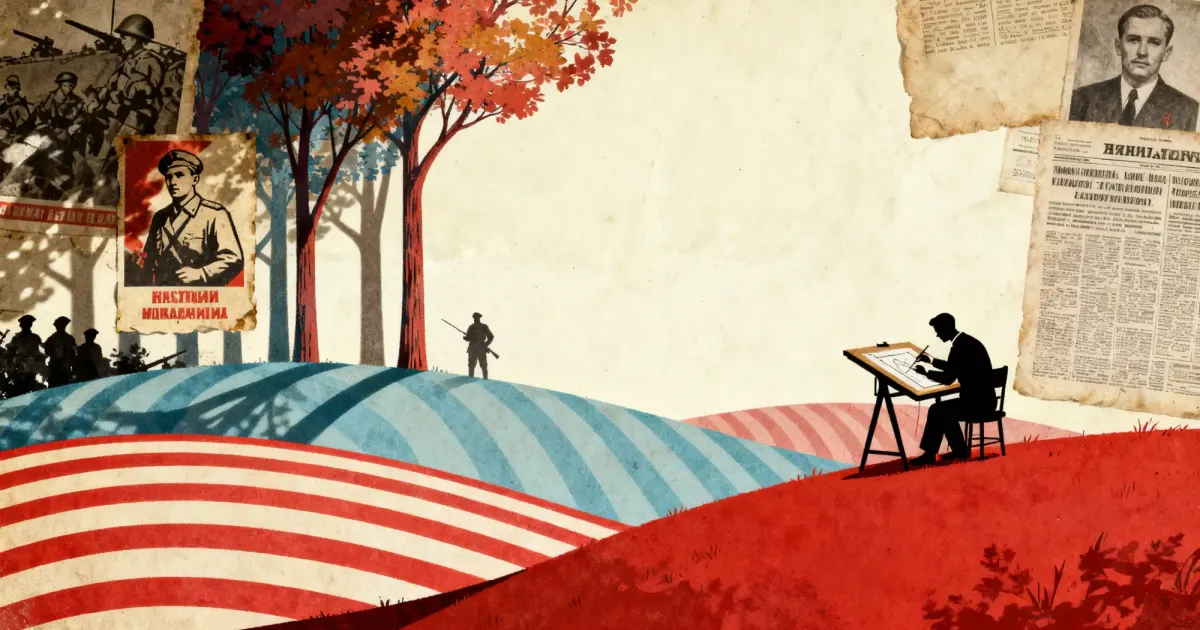
The Secret Life of Seuss: Beyond the Whimsy, Into the Weeds

For generations, the name Dr. Seuss has been synonymous with childhood itself. It conjures images of whimsical creatures, tongue-twisting rhymes, and vibrant, unforgettable worlds. The Cat in the Hat, How the Grinch Stole Christmas!, Green Eggs and Ham—these aren't just books; they're foundational texts, shaping early literacy and imagination for millions. Theodor Seuss Geisel crafted a universe that felt both profoundly silly and deeply moral, teaching lessons about tolerance, environmentalism, and the dangers of conformity, all wrapped in a technicolor package of pure fun.
Beneath the fuzzy surface of the Lorax's Truffula Trees and Horton's faithful egg-sitting lies a more complicated story. Geisel wasn't just a beloved children's author; he was a sharp political cartoonist, an advertising man, a wartime propagandist who created surprisingly raunchy cartoons for GIs, and, in recent years, a figure whose legacy is being re-examined through the lens of racial stereotypes present in his earlier work.
The story of Dr. Seuss is not a simple one. It involves secret projects, coded messages (though perhaps not the kind conspiracy theorists dream of), and a fascinating evolution from mainstream commercial artist to boundary-pushing literacy champion, and finally, to a complex historical figure whose complete works demand a closer look. Let’s peel back the layers of the Sneetches' stars and explore the man behind the myth, including his "edgy" side and the real controversies—and maybe even a few imagined conspiracies—that surround his enduring legacy.
Part 1: From Ted Geisel to Dr. Seuss – The Early Years

Born Theodor Seuss Geisel in 1904 in Springfield, Massachusetts, the man who would become Dr. Seuss wasn't initially destined for children's literature. His early life was fairly conventional for the time, though his German-American heritage would become significant during the World Wars. His path towards illustration began at Dartmouth College, where he became editor-in-chief of the campus humor magazine, Jack-O-Lantern. It was here that the "Seuss" pseudonym first emerged, ironically, after Geisel was caught drinking gin in his dorm room during Prohibition and was banned from extracurricular activities, including the magazine. To continue contributing, he started signing his work simply "Seuss."
He later added the "Dr." as a playful nod to his father's unfulfilled hopes for him to earn a doctorate at Oxford University. Geisel did attend Oxford, intending to become a professor of English literature, but found himself bored by academia. It was his future wife, Helen Palmer, who saw his elaborate doodles in his notebooks and suggested he pursue drawing professionally. Taking her advice, he left Oxford without a degree and returned to the United States in 1927, determined to make a living as an illustrator and writer.
His initial foray wasn't into children's books, but into the lucrative world of advertising. For over 15 years, Geisel created wildly successful campaigns for companies like Standard Oil, particularly for their insecticide brand, Flit. His catchy slogan, "Quick, Henry, the Flit!" accompanied by cartoons of people facing bizarre bug-related scenarios, became a national catchphrase. This period honed his skills in visual storytelling and concise, memorable language, but it was commercial work, designed to sell products. He also contributed cartoons and humorous articles to magazines like Judgeand Life.
Before he ever taught kids about green eggs or Grinches, Geisel helped adults laugh at their own mistakes. In 1931, he illustrated Boners, a compilation of unintentionally hilarious answers and classroom blunders collected from schoolchildren. The title, which raises eyebrows today, was completely innocent at the time; “boner” simply meant “blunder.” The book was a hit, spawning sequels like More Boners and Still More Boners, eventually combined into The Pocket Book of Boners, one of the earliest humor bestsellers of the 1930s. The project showcased Geisel’s talent for blending absurdity with gentle satire, turning human error into comedy, a skill he’d later refine for children, where mistakes became lessons wrapped in rhyme.
When he wasn’t sketching for ads or anthologies, Geisel amused himself by building strange creatures out of real animal parts. His father, who ran Springfield’s Forest Park Zoo, would save him discarded horns, antlers, and beaks, which Ted used to assemble surreal hybrids he called his “Unorthodox Collection of Animals.” He mounted them on plaques and hung them around his home like trophies from a safari that only existed in his imagination. Long before the Grinch or the Sneetches, Geisel was already creating his own strange fauna, turning leftovers from the family zoo into the blueprint for an entire species of Seussian oddities.
His transition to children's literature happened almost by accident. According to Geisel, the unique rhythm of his first children's book, And to Think That I Saw It on Mulberry Street (1937), came to him during a long sea voyage as the ship's engines chugged along. The book, featuring a boy whose imagination transforms a simple horse-drawn cart into an increasingly fantastical parade, was rejected by dozens of publishers—reportedly 27—before a chance encounter with an old Dartmouth friend led to its publication by Vanguard Press. It was a modest success, but it marked the beginning of Dr. Seuss, the children's author.
Part 2: The War Years – Political Cartoons and Private Snafu

As the world hurtled towards World War II, Geisel's focus shifted dramatically. Deeply concerned about the rise of fascism in Europe and frustrated by American isolationism, he put his children's book career largely on hold and became the chief editorial cartoonist for the New York newspaper PM from 1941 to 1943.
This is where the "edgy" Seuss truly emerges for the public eye. His cartoons from this era are sharp, biting, and fiercely political. They leave no doubt about his stance: he relentlessly attacked Adolf Hitler, Benito Mussolini, and Hideki Tojo, often depicting them in grotesque, cartoonish forms. He savaged American isolationists, particularly figures like Charles Lindbergh and the "America First" movement, portraying them as ostriches with their heads in the sand or as being naively (or willfully) blind to the fascist threat. His famous cartoon depicting a mother reading a storybook Adolf the Wolf to her wide-eyed children, with the caption "...and the wolf chewed up the children and spit out their bones... But those were Foreign Children and it didn't really matter," powerfully condemned indifference to overseas atrocities.
However, this period also contains some of his most controversial work. Reflecting the widespread racism of the era, particularly after the attack on Pearl Harbor, Geisel's cartoons frequently depicted Japanese people, and sometimes Japanese Americans, using vicious stereotypes—buck teeth, slanted eyes, exaggerated features—portraying them as inherently treacherous, fifth columnists, or part of an undifferentiated mass threat. These images stand in stark contrast to the messages of tolerance found in his later children's books and are a significant part of the critical re-evaluation of his legacy today.
Enter Private Snafu: Seuss Gets Raunchy for the Army
Geisel's commitment to the war effort went beyond editorial cartoons. In 1943, he joined the U.S. Army and was assigned to the Signal Corps, working alongside filmmakers like Frank Capra. His unit was tasked with creating training and propaganda films for soldiers. It was here that Geisel, along with colleagues like director Chuck Jones (of Looney Tunes fame) and composer Carl Stalling, created one of the most fascinating and little-known parts of his oeuvre: Private Snafu.
Private Snafu (Situation Normal: All Fouled Up... or a more profane F-word) was a series of animated shorts produced by Warner Bros. Cartoons, intended only for viewing by American soldiers. Because they weren't meant for the public, they were delightfully unconstrained by the usual censorship rules (the Hays Code). The purpose of the cartoons was straightforward: teach soldiers important lessons about security, hygiene, avoiding booby traps, dealing with malaria, and following orders, all by showing what not to do through the disastrous misadventures of the titular Private Snafu, a clumsy, clueless, and often horny GI.
Written largely by Geisel (often in his characteristic rhyme) and animated in the signature Warner Bros. style, the Snafu cartoons were funny, fast-paced, and surprisingly adult. They featured:
Crude Humor: Jokes about latrines, body odor, venereal diseases, and incompetent officers were common.
Sexual Innuendo: Snafu was frequently depicted chasing women or being distracted by pin-ups, often leading to dire consequences related to military security. Some shorts featured scantily clad (by 1940s standards) female characters.
Cartoon Violence: While played for laughs, the consequences of Snafu's mistakes were often grim, reflecting the real dangers soldiers faced. He might accidentally blow himself up, get captured, or lead his comrades into an ambush.
Mild Profanity: While not constant, the language was saltier than anything found in mainstream animation.
Mel Blanc, the legendary “Man of a Thousand Voices” behind Bugs Bunny, Daffy Duck, and countless Looney Tunes characters, also lent his vocal talents to Private Snafu. His manic timing and elastic delivery gave the bumbling soldier a distinct personality—half hapless recruit, half cartoon everyman—making the Army’s training films as entertaining as they were educational.
The Snafu series was incredibly effective. By using humor and animation, the Army could deliver essential training messages in a format soldiers would actually watch and remember. Geisel's contribution was key, blending his rhyming style with the practical needs of military instruction. It remains a fascinating example of "edgy Seuss," using his unique talents for a very specific, non-child-friendly purpose. He also created pamphlets and other materials, including contributing to the design of posters for the Treasury Department promoting war bonds.
Part 3: Post-War Boom – Literacy, Loraxes, and Lessons

After the war, Geisel returned to children's books, but the landscape had changed, partly because of concerns about literacy in America. A 1954 article in Life magazine by John Hersey, titled "Why Johnny Can’t Read", lamented the dullness of early reader books like the Dick and Jane series. Hersey challenged Geisel directly, suggesting he write a book using a limited vocabulary that would be more engaging for young readers.
Geisel accepted the challenge. Given a list of 348 basic words, he struggled initially, finding the restriction creatively stifling. The breakthrough reportedly came when he decided to use the first two rhyming words he could find from the list: "cat" and "hat." The result was The Cat in the Hat (1957), a book that revolutionized children's literature. Using only 236 distinct words, it told a chaotic, funny, and utterly captivating story that made learning to read feel like an adventure, not a chore. It was an instant phenomenon and led to the creation of Beginner Books, a publishing imprint co-founded by Geisel himself, dedicated to creating high-interest, low-vocabulary books for early readers.
This period marked the height of Dr. Seuss's fame and creative output. He produced classics like How the Grinch Stole Christmas! (1957), Green Eggs and Ham (1960, famously written on a bet that he couldn't write a book using only 50 different words), One Fish Two Fish Red Fish Blue Fish (1960), and Hop on Pop (1963). His work was celebrated for its imagination, its linguistic playfulness, and its ability to connect with children on their own level.
His work was celebrated for its imagination, linguistic playfulness, and ability to connect with children on their own level. That playfulness even slipped into the language itself. Take the word nerd. Yes, that word—the badge of honor (or insult) worn by anyone who knows too much about Star Trek or owns more than one calculator. The first time it ever appeared in print was in a Dr. Seuss book. In If I Ran the Zoo (1950), young Gerald McGrew boasts about the strange creatures he’ll collect, listing “a Nerkle, a Nerd, and a Seersucker too.” That’s it—no explanation, just a nonsense name among other Seussian oddities. From that single throwaway line, the word somehow escaped the zoo, crept into college slang, and evolved into global vernacular. So the next time someone calls you a nerd, remember: it all started with Dr. Seuss, a Seersucker, and whatever the heck a Nerkle is. The man didn’t just invent worlds; he invented the people who analyze them.
The sharp social commentator from the war years hadn't entirely disappeared. Several of his later books tackled complex themes, often sparking debate about their underlying messages:
The Sneetches and Other Stories (1961): Widely interpreted as a parable about racial discrimination and conformity, with the Star-Belly Sneetches looking down on the Plain-Belly Sneetches until Sylvester McMonkey McBean's absurd star-on/star-off machine makes their differences meaningless (and profitable).
The Lorax (1971): A powerful and surprisingly melancholic tale about environmental destruction caused by unchecked greed (the Once-ler chopping down Truffula Trees to make Thneeds). It became an anthem for the environmental movement, though it also drew criticism from some industries, like logging, for its perceived anti-capitalist message.
The Butter Battle Book (1984): A stark allegory for the Cold War arms race, depicting the Yooks and the Zooks escalating their conflict over which side of their bread should be buttered, culminating in both sides poised to drop the ultimate "Bitsy Big-Boy Boomeroo" bomb. Published during the Reagan era, it was controversial for its bleak ending and its perceived anti-war stance, even being banned in some libraries.
These books showed that Geisel could use his whimsical style to address serious contemporary issues, embedding surprisingly potent critiques within stories accessible to children.
Part 4: Controversies, Conspiracies, and Complexities

Despite his near-universal beloved status for decades, Dr. Seuss's legacy has faced significant re-evaluation in recent years, centered primarily on the issue of racism in his work. This is not a "conspiracy theory" but a documented historical reality that requires examination.
The Racism Controversy
As mentioned earlier, Geisel's WWII political cartoons contained blatant anti-Japanese racism, using harmful stereotypes common at the time but still shocking to modern eyes. Beyond the wartime cartoons, problematic depictions have also been identified in some of his children's books.
Examples include:
And to Think That I Saw It on Mulberry Street: An early version contained a character called "a Chinaman" depicted with yellow skin, slanted eyes, pigtails, and carrying chopsticks and a bowl, leaning heavily on racist tropes. Geisel himself revised this illustration in the 1970s, changing the character's skin tone and removing the pigtails and stereotypical features, renaming him "a Chinese man."
If I Ran the Zoo (1950): Contains caricatures of African and Asian peoples, including drawings of African characters resembling monkeys and Asian characters described as having eyes "slanted" and wearing conical hats.
On Beyond Zebra! (1955): Features a character described as a "Nazzim of Bazzim," depicted as a vaguely Middle Eastern figure riding a camel-like creature, which some critics argue relies on Orientalist stereotypes.
These depictions, while reflecting widespread prejudices of their time, are undeniably rooted in racist visual language. In March 2021, Dr. Seuss Enterprises, the organization managing Geisel's estate and legacy, announced it would cease publication and licensing of six Dr. Seuss books—Mulberry Street, If I Ran the Zoo, McElligot's Pool, On Beyond Zebra!, Scrambled Eggs Super!, and The Cat's Quizzer—stating that "these books portray people in ways that are hurtful and wrong."
This decision sparked considerable public debate. Some praised it as a necessary step to acknowledge and address the harm caused by racist imagery, while others criticized it as "cancel culture" or an overreaction to historical context. Regardless of one's stance, the controversy highlights the complex task of reconciling the immense joy and educational value Dr. Seuss's work has provided with the harmful stereotypes embedded in parts of it.
Hidden Meanings and "Conspiracies"
Beyond the documented issue of racism, the world of Dr. Seuss is often subject to interpretations searching for hidden meanings, sometimes bordering on conspiratorial thinking. While books like The Lorax and The Butter Battle Book carry clear allegorical weight, fans and critics have sometimes read deeper, more specific political or social agendas into his simpler works.
Is Green Eggs and Ham about trying new things, or is it propaganda for...? Some might playfully suggest it's a commentary on conformity or peer pressure.
Is Yertle the Turtle (1958) just about a power-hungry turtle, or is it a direct allegory for Hitler? Geisel himself reportedly suggested this link.
Is Horton Hears a Who! (1954) about protecting the vulnerable, or is it an anti-abortion statement? This interpretation gained traction in pro-life circles due to the line "A person's a person, no matter how small," though Geisel's widow, Audrey, publicly rejected this specific reading.
These interpretations, while sometimes stretching credulity, speak to the richness and resonance of Seuss's work. His stories operate on multiple levels, allowing readers to find meaning relevant to their own lives and times. However, it's crucial to distinguish between analyzing literary allegory and projecting unfounded "conspiracy theories" onto the text or the author. There's no credible evidence that Geisel was embedding secret codes for shadowy organizations or promoting hidden, nefarious agendas beyond the overt (and sometimes controversial) social messages in books like The Lorax or Butter Battle. The real "secrets" of Seuss lie more in his complex personal history and the evolution of his views, rather than in hidden symbols in Hop on Pop.
Conclusion: The Enduring, Complicated Legacy of the Doctor

Theodor Seuss Geisel died in 1991, leaving behind a body of work that fundamentally changed children's literature and the way generations learned to read. His impact is immeasurable. He injected fun, rhythm, and imagination into early literacy. He created characters that feel like old friends and worlds that continue to spark wonder. His linguistic creativity gave us unforgettable phrases and even arguably influenced hip-hop rhyming patterns.
Yet, his legacy is not uncomplicated. The man who wrote passionately against prejudice in The Sneetches also drew deeply prejudiced cartoons during WWII. The creator of whimsical worlds also included harmful stereotypes in some of his books. Acknowledging this complexity doesn't erase the joy his best work brings, nor does the joy excuse the harm.
Dr. Seuss remains a giant of children's literature, but our understanding of him must evolve. We can celebrate the genius of The Cat in the Hat while also critically examining the context and content of If I Ran the Zoo. We can appreciate his fierce anti-fascism during the war while acknowledging the racism that accompanied it. The story of Dr. Seuss is, ultimately, a very human one: full of brilliance, creativity, contradiction, and the capacity for both profound insight and regrettable blindness. His world wasn't just whimsical; it was, like ours, messy and complicated. And that might be the most important lesson of all. He taught generations to read, to laugh, and perhaps unintentionally to look closer. The cat’s hat may be red and white, but its stripes, like the man who drew them, were never simple.
```