

Bigfoot: The Blurry King of the Cryptids
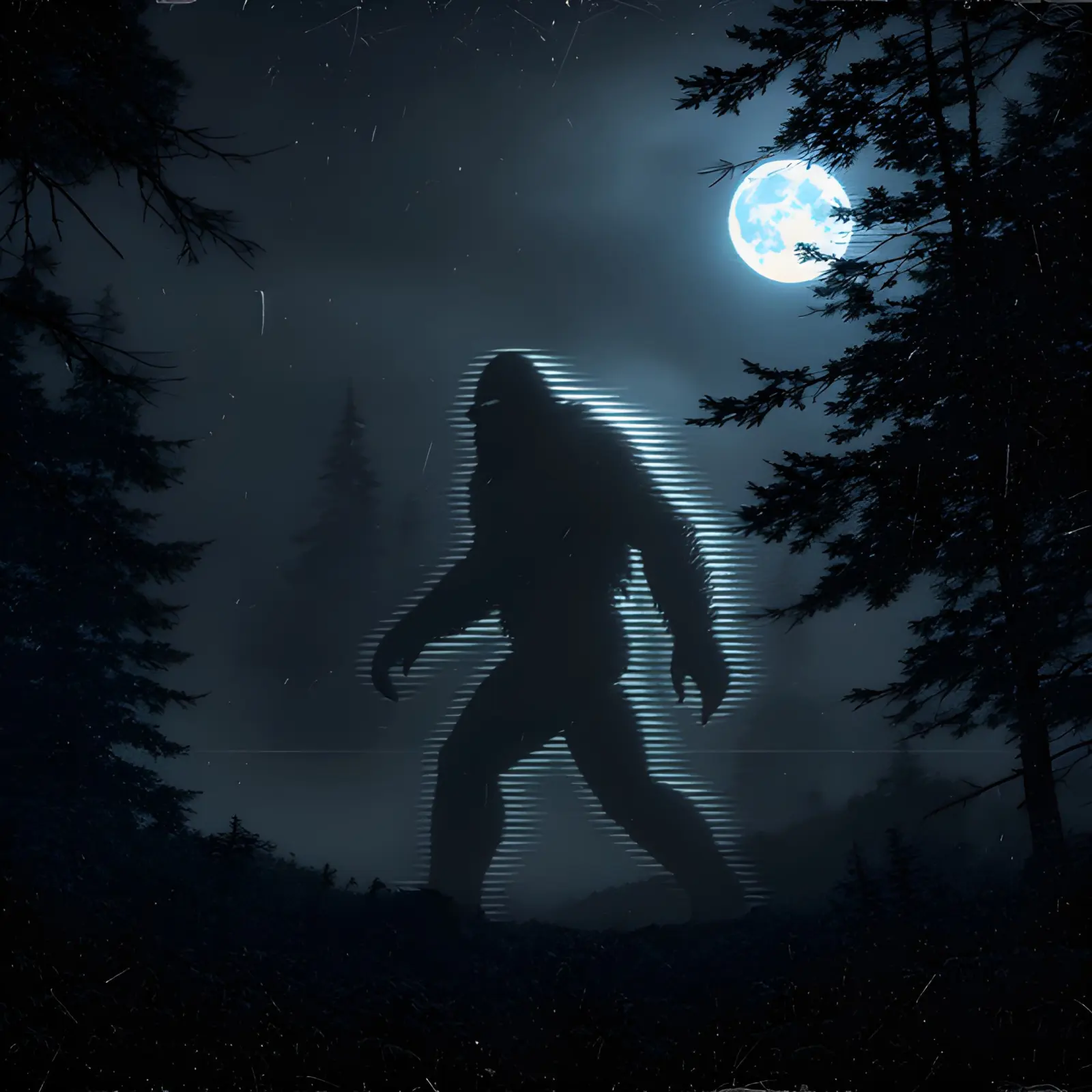
If cryptids had LinkedIn, Bigfoot would be the CEO. He’s the household name, the star of shaky cam footage, and the reason half the Pacific Northwest won’t go camping without a flare gun. Skeptics call him folklore. Believers call him “hairy neighbor.” We call him the ultimate marketing department for blurry photography.
Folklore Roots: Before the Hashtags
Bigfoot didn’t stumble out of a 1960s tabloid. Long before suburban dads in cargo shorts were buying trail cams, Indigenous nations across the Pacific Northwest told stories of a giant, hairy man-creature. The Salishan peoples used the word Sasq’ets—from which “Sasquatch” was born. These beings were often cast as guardians of the wilderness, spirits of the deep woods, or tricksters who punished those who disrespected nature. In other words: forest HR managers.
European settlers picked up the tales and, in true settler fashion, immediately assumed the creature was either a demon, a missing link, or a convenient excuse for lost livestock. By the 1800s, “wild man” reports started appearing in local papers, complete with sketches that looked suspiciously like “guy in furs with bad hygiene.”
The Golden Age of Bigfoot
Fast forward to the 20th century, when Bigfoot went from local legend to national celebrity. The tipping point? October 20, 1967. The Patterson–Gimlin film. You’ve seen it: a grainy, 59.5-second reel showing a large, hair-covered figure striding across a clearing in Bluff Creek, California. That casual over-the-shoulder glance? Pure icon. The strut? Runway ready. Was it a person in a gorilla suit? Was it proof of a new species? Or was it just the universe’s first viral GIF?
The film ignited a frenzy. Reporters, adventurers, and opportunists flocked to Northern California. By the 1970s, Bigfoot sightings were so common you could barely buy milk without someone claiming they saw him in the dairy aisle. County fairs, roadside attractions, and cryptid clubs popped up faster than you can say “grainy photo.”
Hoaxes, Hoofprints, and Hilarious Confessions
With great fame comes great prank potential. Enter Ray Wallace, a logging company owner who, in 1958, allegedly left giant wooden footprints around worksites. After his death in 2002, his family revealed the carved wooden feet he’d used—essentially making him the Banksy of fake cryptids. But even after that revelation, Bigfoot believers doubled down: “Sure, Wallace faked some prints. But he didn’t fake all of them.” Classic cryptid logic.
Other hoaxes included hair samples later identified as horsehair, bears, or the occasional human wig. At least one “Bigfoot skull” turned out to be a gorilla mask buried in dirt. To this day, pranksters still churn out blurry TikToks of suspicious silhouettes lumbering across campgrounds, proving that hoaxes never die—they just migrate platforms.
Science vs. Sasquatch
Biologists, unsurprisingly, remain skeptical. The main argument: there’s no fossil record of such a giant ape in North America. No confirmed scat, no bodies, no bones—just stories and the occasional footprint. Scientists argue that a breeding population of such creatures would leave behind clear evidence. Cryptozoologists counter: “absence of evidence isn’t evidence of absence.” (Which is exactly what you say when you lose your car keys but don’t want to admit it.)
Still, labs occasionally receive alleged Bigfoot samples: tufts of fur, droppings, or “mysterious fluids.” DNA analysis inevitably reveals… cow, dog, or the janitor’s hair. Every time science shoots down a sample, believers shrug and say, “Well, it was obviously contaminated.” Contaminated, or maybe Bigfoot is a master of bio-hacking?
Tourism, Festivals, and Capitalism
If you’re in Willow Creek, California—the self-declared “Bigfoot Capital of the World”—you can tour the Bigfoot Museum, pose with enormous statues, and buy more Sasquatch souvenirs than you knew existed. Washington State has passed laws “protecting” Bigfoot from hunters. Skamania County even made it a felony to kill one. Which is both heartwarming and wildly suspicious: why pass laws for creatures that don’t exist… unless, you know, they exist?
Festivals pop up everywhere: parades, cosplay contests, “squatch calls” judged like a talent show. There’s even a Bigfoot 5K run, which feels cruel, since we all know Bigfoot would absolutely smoke us in cardio.
Pop Culture: The Hairy Mascot of Mystery
Bigfoot’s blurry silhouette is instantly recognizable. He’s starred in horror films, documentaries, jerky commercials (“Messin’ with Sasquatch”), and even children’s cartoons. He’s a Halloween costume, a bumper sticker, and the punchline of any joke involving “that hairy guy in the woods.” He’s transcended his role as a cryptid and become cultural shorthand for “we don’t know what the hell that was, but let’s sell merch.”
Case in point: our shirts. Unlike Bigfoot, they’re easy to find, smell better, and won’t run off into the woods the second you try to take a photo.
Alternative Theories: Because Why Not
- Alien Pet: Bigfoot isn’t native to Earth—he’s an interstellar guard dog that slipped off his leash during Roswell.
- Interdimensional Traveler: He’s blurry because he’s phasing between dimensions. Think Doctor Strange with worse grooming.
- Government Experiment: Half-ape, half-soldier. All classified. The Pentagon knows, but you don’t have clearance.
- The Ultimate Prank: Maybe Bigfoot is just one dude in a costume who never breaks character. The greatest method actor of all time.
Whatever theory you pick, there’s a shirt waiting to back you up at the Conspiracy Shirt Company. Because paranoia is funnier when it’s wearable.
How to Hunt Bigfoot (A Totally Serious Guide)
Step 1: Buy an expensive night-vision camera. Step 2: Forget to charge the batteries. Step 3: Trip over a log, scream, and film your own ankle for three hours. Congratulations, you’ve joined the proud ranks of Bigfoot hunters everywhere.
If you actually want to “increase your chances,” here’s the secret formula:
- Go where Bigfoot is rumored to be.
- Stay up all night fueled by gas station jerky and bad coffee.
- Hear something rustling? That’s him. Or a raccoon. Or your buddy Steve messing with you.
- Whatever you do, don’t get a clear photo. That ruins the mystique.
Final Thought: The Legend Lives
Bigfoot may be a hoax, a misidentified bear, or an interdimensional prankster. But he endures because he’s fun. He’s the thrill of the unknown, the blurry photo that makes you squint, the reason to keep hiking even when your calves are screaming. Whether he’s real or not doesn’t matter—he’s a story we keep telling.
And if you want to tell that story on your chest? Grab a cryptid-approved tee and become the blurry legend your neighborhood deserves.