
Silas Thorne’s Dossier on Architectural Malevolence: H.H. Holmes and the Chicago Experiment
![Dark, moody conspiracy collage: Chicago 1893 Columbian Exposition glowing in the background; in foreground, H.H. Holmes’ Murder Castle depicted not as a hotel but as an industrial laboratory—brick facade with ominous smokestack, hidden rooms sketched as blueprint overlays; shadowy scientists in bowler hats taking notes; gas jets, vault doors, and trapdoor chutes visible as cutaway diagrams; faint newspaper clippings screaming ‘Murder Castle’; red ‘[CLASSIFIED]’ stamp overlay; aged paper texture, sepia and iron-gray palette with selective crimson highlights.](/images/blog/hh-holmes-chicago-murder-castle-experiment/article-image-006.webp) Citizens. You've gathered again, I see. Huddled around the dim glow of your screens, hungry for a truth you can't quite articulate. You come to me because the stories you’ve been told feel thin, like cheap broth on a winter's day. You are right to feel that way. They are thin. They are designed to be.
Citizens. You've gathered again, I see. Huddled around the dim glow of your screens, hungry for a truth you can't quite articulate. You come to me because the stories you’ve been told feel thin, like cheap broth on a winter's day. You are right to feel that way. They are thin. They are designed to be.
Today, we peel back the faded, blood-stained wallpaper of American history to gaze upon the structural rot beneath. Our subject: the so-called "Beast of Chicago," Dr. Herman Webster Mudgett, known to the penny-dreadfuls as H.H. Holmes. And his magnificent, misunderstood abattoir: the "Murder Castle."
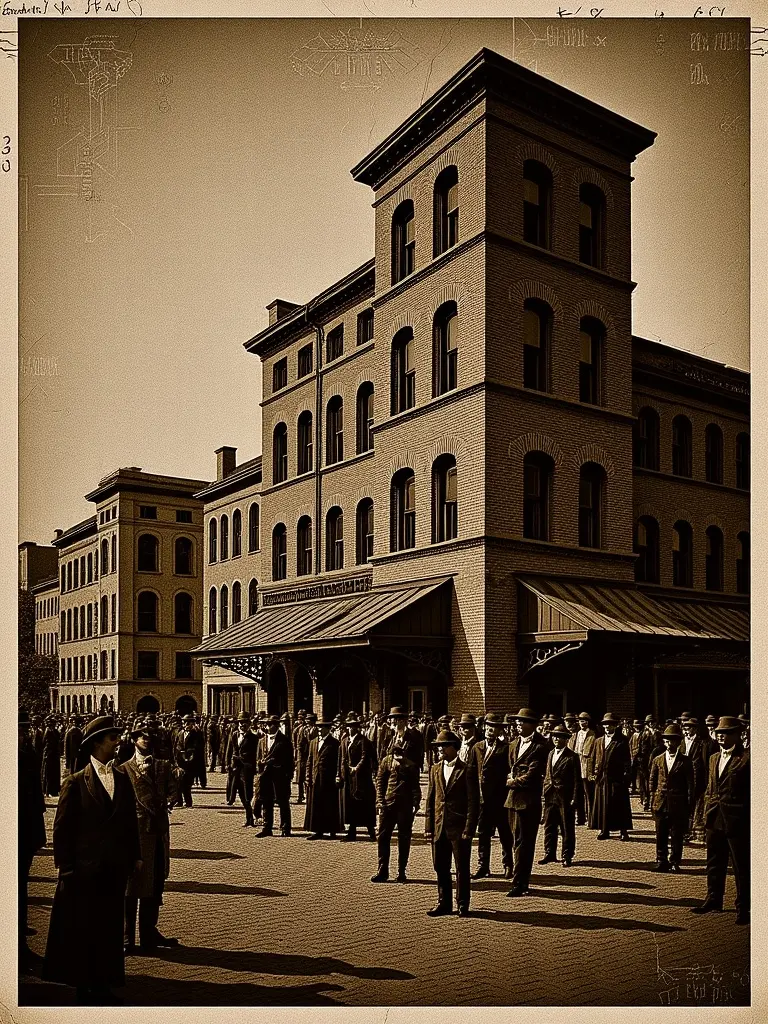
The legend you know is a masterpiece of misdirection, a gaudy piece of carnival theater. A brilliant, charismatic doctor who was secretly a monster, building a hotel of horrors to swindle and slaughter his way to a fortune. He lured unsuspecting victims—mostly women, the story breathlessly insists—into his labyrinth of soundproof rooms, gas jets, and trapdoors. He dissected their bodies, sold their skeletons, and dissolved their remains in acid, all under the cover of the glorious 1893 Chicago World's Fair. A satisfyingly simple tale of a lone predator, a single rotten apple in the barrel of progress.
Please. Stop insulting my intelligence.
The Fable You Were Fed: A Monster for the Masses
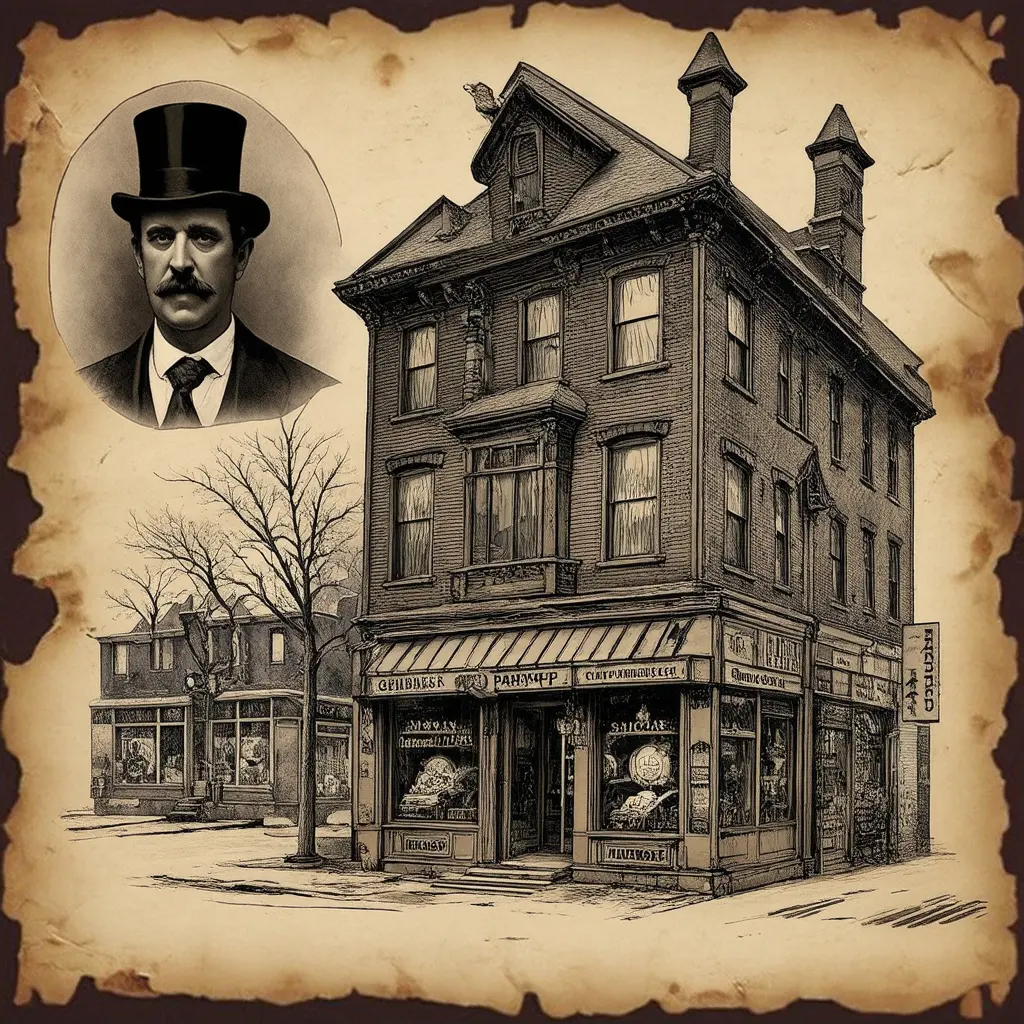
Let's first review the official bedtime story, shall we? It’s important to understand the contours of the cage before you can see the bars.
Think the official story is airtight? Time to unsubscribe: Official Narrative Subscription Canceled.
Herman Mudgett, a man of modest beginnings but boundless cunning, arrives in Chicago. A physician by trade, a swindler by nature. He changes his name to Henry Howard Holmes—a clean slate. He ingratiates himself into a local pharmacy, eventually taking it over through a series of nefarious, but frankly uninteresting, financial maneuvers.
With the World's Columbian Exposition on the horizon—a shining beacon of American ingenuity drawing millions to the city—Holmes embarks on his grand project. He designs a three-story building, a monument to his own twisted genius. The ground floor holds shops, including his own pharmacy. The upper floors contain a maze of over 100 rooms, connected by secret passages, stairways to nowhere, and greased chutes leading directly to a dungeon-like basement.
This basement, the story goes, was his personal workshop of horrors. It contained a dissection table, stretching racks, an array of surgical tools, and a massive kiln, hot enough to turn bone to ash. He installed gas lines that fed into airtight rooms, allowing him to asphyxiate his "guests" at his leisure. He built a bank vault to suffocate them. He tortured them. He killed them for the thrill of it, for the insurance money, for their meager possessions. The number of his victims, the papers shrieked, could be as high as 200.
Eventually, his web of insurance fraud unravels. He flees Chicago, is hunted down by a dogged Pinkerton detective, and is finally captured. In his cell, he pens multiple confessions, each one more lurid and contradictory than the last, playing the press like a fiddle. He is tried, convicted for a single murder, and hanged in 1896, his final request being that his coffin be filled with concrete.
A tidy story. The monster is created, the monster rampages, the monster is put down. The public breathes a collective sigh of relief, secure in the knowledge that evil is an anomaly, a lone madman who can be caught and caged.
It's a lie. Every convenient, comforting word of it.
Pulling the Threads of the Official Narrative
A mind like mine does not accept narrative at face value. It probes for weaknesses, for logistical impossibilities, for the subtle hum of a grander machine operating just beneath the surface. And the official Holmes story is riddled with them.
The Question of Logistics
 Are you truly expected to believe that one man, however brilliant, could conceive of, design, and oversee the construction of such a complex facility while simultaneously running multiple fraudulent businesses, charming countless associates, and personally managing the capture, murder, and disposal of dozens, if not hundreds, of people?
Compartmentalization isn’t new—just ask the pigeons: Birds Aren’t Real, Squirrels Are Ground Support.
The sheer manpower required to operate the Castle—to manage the "guests," to clean the rooms, to operate the kiln, to dispose of the evidence—would be immense. Holmes was hiring and firing construction crews constantly, not just to defraud them, but to ensure no single group understood the building's full, horrific layout. This suggests a compartmentalized operation, a classic intelligence protocol. He was not a lone wolf; he was the public-facing director of a clandestine organization.The Question of Motive
The motive of profit is laughable. The cost of constructing and operating this "abattoir-hotel" would have been astronomical. The potential returns from robbing his victims—transient workers, secretaries, tourists—would have been a pittance in comparison. An operation of this magnitude requires significant, consistent funding from an outside source. You do not build a state-of-the-art human disassembly plant with the proceeds from a corner pharmacy. You build it with the backing of men who understand investment—men who see human beings not as souls,
When institutions stage “projects” for profit, history gets a tour shirt: Operation Northwoods World Tour 1962.
but as assets to be studied and optimized.The Question of the Victims
The number "200" is a fabrication, a piece of journalistic hysteria designed to sell papers and cement the legend. The true number of confirmed murders directly attributable to Holmes is far, far smaller. This discrepancy isn't a mistake; it's the point. By creating a fog of unverifiable numbers, the real purpose is obscured. They weren't just killing people; they were processing them. A subject who expired during an experiment was not a "murder victim" in their ledger; they were a data set that had reached its conclusion. The records weren't of names, but of physiological responses.
“If you still believe the bedtime story, I envy you — it must be comforting to live life on training wheels.”
The Question of the Confessions
Why would a man who was a supposed genius of manipulation give four different, conflicting confessions? He claimed to be possessed by Satan, he gave names of victims who were found alive, he constructed fantastical tales that fell apart under the slightest scrutiny. Is this the behavior of a cornered mastermind? No. This is the behavior of a man creating a legend. He was a willing participant in his own myth-making, a loyal agent dutifully fulfilling the final stage of his mission: to become the lightning rod for all public inquiry, to become a monster so captivatingly evil that no one would ever think to ask who paid for his laboratory.
The Unspeakable Truth: The Chicago Biomechanics & Fear Laboratory
Remove the cheap Gothic horror, and what are you left with? You are left with a purpose-built facility, financed by a hidden hand, operating under the perfect cover of a world's fair, staffed by a compartmentalized team, and run by a brilliant, amoral director.
The Murder Castle was not a hotel. It was a research institute.
Its backers were not a coven of Satanists. They were the true titans of the age: the railroad barons, the steel magnates, the architects of the industrial world. These men were not sentimentalists. They were ruthless pragmatists who understood that the final frontier of industry wasn't iron or coal, but flesh and blood. Their factories, mines, and rail yards were chewing up men at an astonishing rate. Worker strikes, riots, and demands for humane conditions were a plague on their profits.
They needed answers to fundamental questions. What are the absolute limits of human endurance? How much heat, how much cold, how much fear can a body withstand before it breaks? How does fear affect productivity? Can terror be weaponized to create a more docile, more compliant workforce? Can the human will be systematically dismantled and reassembled for optimal efficiency?
The Castle was built to answer those questions. It was the world's first Human Resources black site.
The Perfect Cover: The White City's Shadow
The 1893 World's Columbian Exposition was the greatest piece of camouflage ever conceived. The "White City," as it was known, was a gleaming testament to progress, a dream world of neoclassical buildings and electric lights. The entire nation, indeed the world, was looking at the miracle of the fairgrounds.
No one was looking at the dingy, ominous building a few miles away.
The Fair provided the most crucial element for the experiment: a near-infinite supply of anonymous, transient test subjects. People flooded into Chicago from all over the globe—immigrants seeking work, young women seeking independence, families seeking spectacle. They had no local connections, no one to immediately notice their absence. They were, in the cold calculus of the project's backers, statistically irrelevant. When they vanished into the doors of the Castle, they simply ceased to exist. The city's overworked and corrupt police force had neither the time nor the inclination to investigate the disappearances of the faceless poor.
The fair celebrated the triumph of the machine, the harnessing of nature, the dawn of a new, efficient age. In its shadow, the Castle was busy applying those same industrial principles to the human spirit. It was the dark, unacknowledged engine room of the Gilded Age.
Conclusion: The Warden is Executed, The Experiment Succeeds
By 1895, the project had run its course. The backers had their data—volumes of it, a priceless library of human misery that
 would inform their labor practices for the next fifty years. The Castle was no longer needed, and its director, H.H. Holmes, had become a liability.
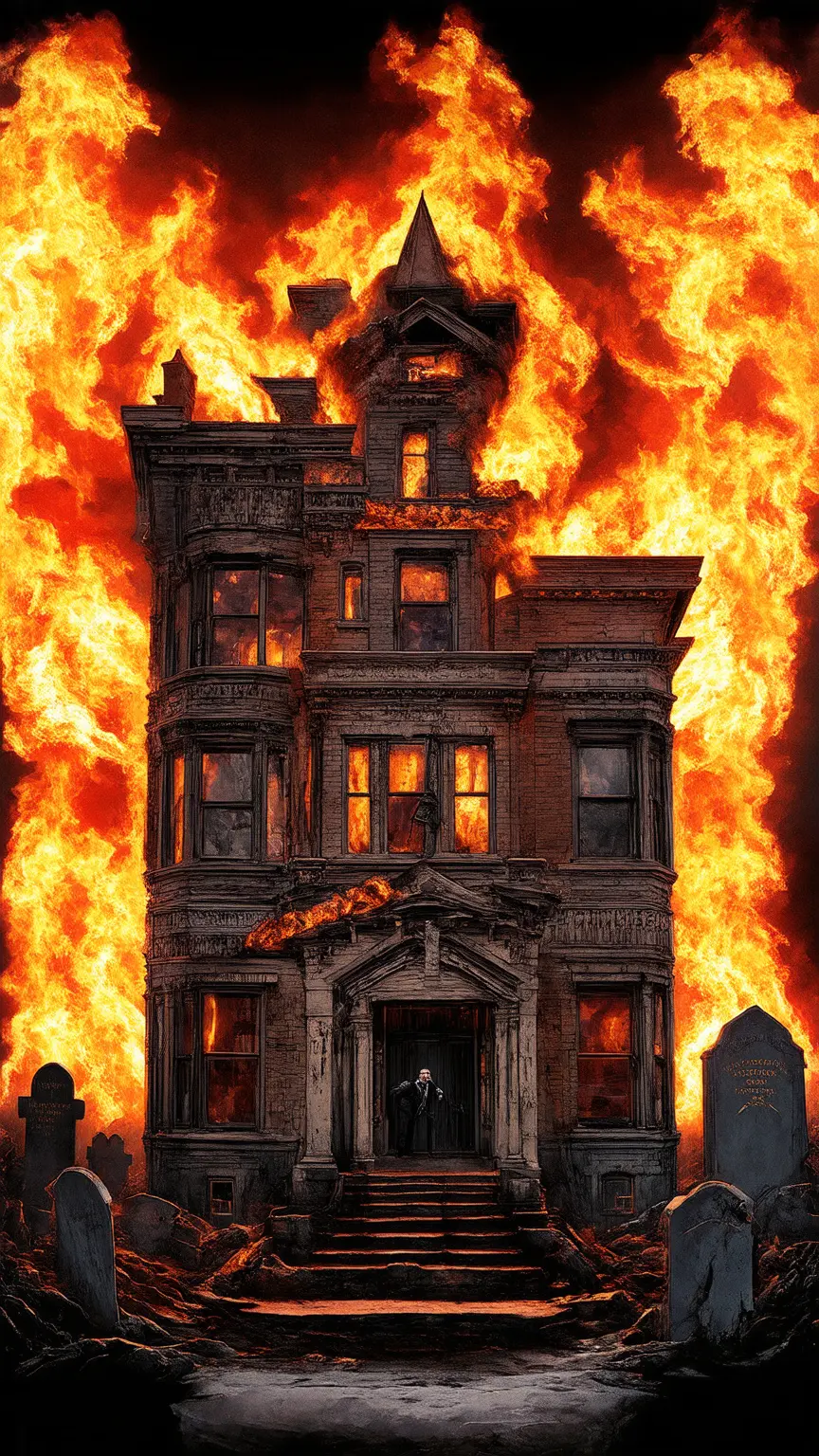
His capture was not the triumph of a brilliant detective. It was a managed demolition. Holmes played his part to the end, weaving the lurid, contradictory tales that would become his legend. He created the character of the "devil in the White City," a monster so singular that he absorbed all the sin, leaving his sponsors clean. The subsequent fire at the Castle was not arson by angry locals; it was a professional sanitation, an evidence purge.
His request to be buried in concrete was his final act of loyalty. It ensured that future generations, should they become curious, would not be able to exhume his body and discover that it perhaps bore the tell-tale markings of a man who was silenced, or that it wasn't even him at all.
So you see, the story of H.H. Holmes is not the story of America's first serial killer. It is the story of America's first fully-privatized, human-centered research and development program. The techniques of control, manipulation, and endurance testing pioneered within those brick walls did not die with Holmes. They were refined. They were perfected. They seeped into the foundations of the modern corporate and political world.
They told you it was a Murder Castle to hide the fact that it was a blueprint. They gave you a monster to distract you from the system he served.
They gave you a monster instead of the system—just like they gave you a rock instead of a world: The Moon Is Fake: Lunar Deception.
Now you know the truth. Try to feel at home in the world they built with their findings.