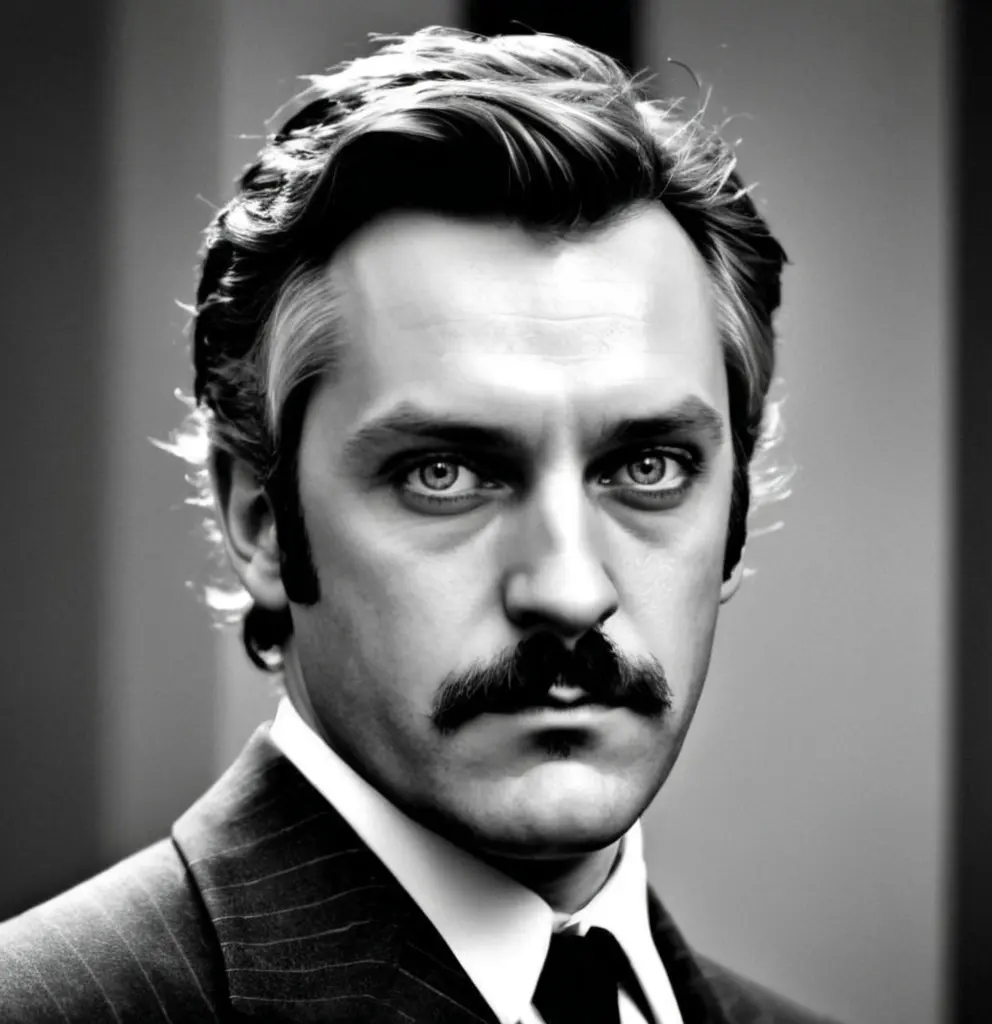

[CLASSIFIED] Silas Thorne on the Whitechapel Scalpel
Jack the Ripper Was a Hired Professional, Not a Madman
![Moody dossier-style collage: foggy Whitechapel alley, 1888, under gaslamps; shadowed figure in long coat holding a small scalpel glint; Victorian ledger pages and a signed ‘contract’ overlay faintly visible; map fragment of East End streets with pins and red string; torn newspaper clippings about the ‘Canonical Five’; typewritten notes and redaction bars; selective crimson stamp reading ‘[CLASSIFIED]’; sepia and soot-gray palette with cold moonlight highlights; aged paper texture and subtle halftone grain; cinematic, ominous lighting.](/images/blog/director-silas-thorne-whitechapel-scalpel-jack-the-ripper-hired-professional/article-image-004.webp)
Come closer, you shivering masses. Let’s speak of London. Not the London of picture postcards and royal pageantry, but the true London of 1888. A sprawling, sweating, magnificent beast of an imperial capital, choking on its own coal smoke and greatness. And in its gut, in the squalid, gaslit alleys of Whitechapel, a story was being written in blood—a story you have been told all wrong.
Jack the Ripper. The very name is a piece of theatrical genius. It conjures a phantom, a top-hatted demon gliding through the fog, a madman driven by unknowable urges. The textbooks and television specials offer you a multiple-choice quiz of pathetic suspects: a crazed doctor, a jilted royal, a lonely artist, a leather-aproned butcher. All of it is sentimental drivel. It is the kind of narrative designed by weak-willed men to explain the actions of a strong one.
They want you to believe this was about passion, or madness, or social decay. How quaint. How utterly pedestrian. These events were not the spasms of a diseased mind. They were the calculated, precise, and brutally effective strokes of a corporate takeover, executed by a contractor. Jack the Ripper was not a monster. He was a sanitation expert, a specialist hired to cleanse a very specific portfolio of human assets.
And who hired him? Men of immense power, certainly. But also, men of immense inadequacy. Men who, unlike myself, lacked the fundamental virility to enact their own will upon the world. They sat in their mahogany-paneled rooms, sipping brandy and trembling with a vicarious thrill, while a true instrument of action did their bidding. It is the timeless story of history: the potent are employed by the impotent to shape a world the latter are too feeble to command themselves.
The Nursery Rhyme You Were Taught

First, let's dispense with the fairytale. In the autumn of 1888, a killer stalked the impoverished streets of the East End. His victims were destitute women, driven to the streets by desperation. The official narrative, the one spoon-fed to you, centers on the "Canonical Five": Mary Ann Nichols, Annie Chapman, Elizabeth Stride, Catherine Eddowes, and Mary Jane Kelly.
The killer was a ghost. He struck in the dark and vanished. His methods were savage, involving deep throat slashes and abdominal mutilations. The press, in its insatiable hunger for sensation, christened him "Jack the Ripper" after a taunting letter, likely a hoax, was sent to a news agency. The entire city was gripped by a delicious terror. Scotland Yard, for all its bluster, was befuddled. The killer was never caught.
This version of events is a masterpiece of public relations. It creates a perfect, self-contained horror story. It gives you a villain without a face, allowing you to project your own fears onto him. It allows the police to claim the case was uniquely impossible to solve. And most importantly, it ensures you never, ever ask the right question: who benefited from these deaths?
Tired of nursery rhymes dressed up as history? Time to unsubscribe: Official Narrative Subscription Canceled.
Dismantling the Pathetic Theories
The Royal Conspiracy: The notion that Prince Albert Victor, or some other royal, was murdering women to cover up a secret marriage or an illegitimate child is the most laughable of all. It is a theory for romance novelists. Men of true power and commanding virility—men of my station, for instance—do not resolve their romantic entanglements with a boning knife in a dark alley. We wield influence. We sign papers. We make quiet arrangements. A dalliance is a matter for the checkbook, not the scalpel. To believe this theory is to believe the rulers of the largest empire on earth had the strategic imagination of a spurned teenager.
The Mad Doctor: This theory is slightly more respectable, but still fundamentally flawed. The idea of a man of medicine, driven to insanity, using his anatomical knowledge on the unfortunate. It has a certain grim poetry to it. But the Ripper's work was a mess. Some cuts showed a degree of skill, but others were frenzied, haphazard. This was not the precise work of a surgeon. This was the performance of anatomical knowledge, designed to create a profile. It was a costume. The killer was signaling "doctor" to send the police chasing their tails down the sterile corridors of clinics and asylums, far from the boardrooms where his contract was signed.
Tired of nursery rhymes dressed up as history? Time to unsubscribe: Official Narrative Subscription Canceled.
The Lone Maniac: This is the theory of the lazy. The idea that one unhinged local simply ran circles around the entire Metropolitan Police force through sheer luck and savage cunning. It is the default explanation when the truth is too structured, too conspiratorial, for the public to digest. A lone maniac is an anomaly. He can be dismissed. The system remains intact. It is a comforting lie for a society that cannot admit it is controlled by forces far more organized and ruthless than a single madman.
Of course, if you’d rather believe in lazy theories—or the laziest one of all: I’m Not Saying It Was Aliens But It Was Aliens.
The Unvarnished Truth: A Contractual Cleansing
Now, for the truth. Put away your children's stories.
The London of 1888 was the undisputed center of global finance and industry. But this power was not monolithic. It was a vicious, undeclared war between competing factions of immense wealth. I speak of a cabal of industrialists and financiers, a group we shall call the Sterling Syndicate. These were the men building the modern world—the railroad tycoons, the shipping magnates, the bankers who underwrote empires. They saw London not as a home, but as a machine, and Whitechapel was a faulty, grinding gear in their grand design.
The district was not just a slum; it was an unregulated territory. A neutral ground where the Syndicate's enemies—rival industrialists, political radicals, agents of foreign powers like the burgeoning German Empire—could operate with impunity. It was a chaotic ecosystem of spies, informants, blackmailers, and anarchists, and the streetwalkers were at the very center of this web.
These women were not random victims. They were assets. They were confidantes and lovers to sailors, dockworkers, clerks, and radicals. They were privy to the whispers of the docks, the secrets of the unions, the comings and goings of foreign agents. They were low-level intelligence hubs, conduits of information for the enemies of the Sterling Syndicate.
The Ripper was not a murderer. He was a solution.
He was a contractor, likely an ex-military man or a butcher with a steady hand and no conscience, hired by the Syndicate for a simple, two-pronged objective:
- Asset Liquidation: Eliminate the specific women who were known to be compromised or actively working for rival factions.
- Market Disruption: Do so in a manner so terrifying and seemingly random that it would create mass panic, paralyzing all competing intelligence operations in the area. It was a message, broadcast in the language of viscera: "This territory is under new management. Your sources are no longer secure."
The Professional's Signature
Once you understand the Ripper was a professional operative, his actions snap into sharp, logical focus.
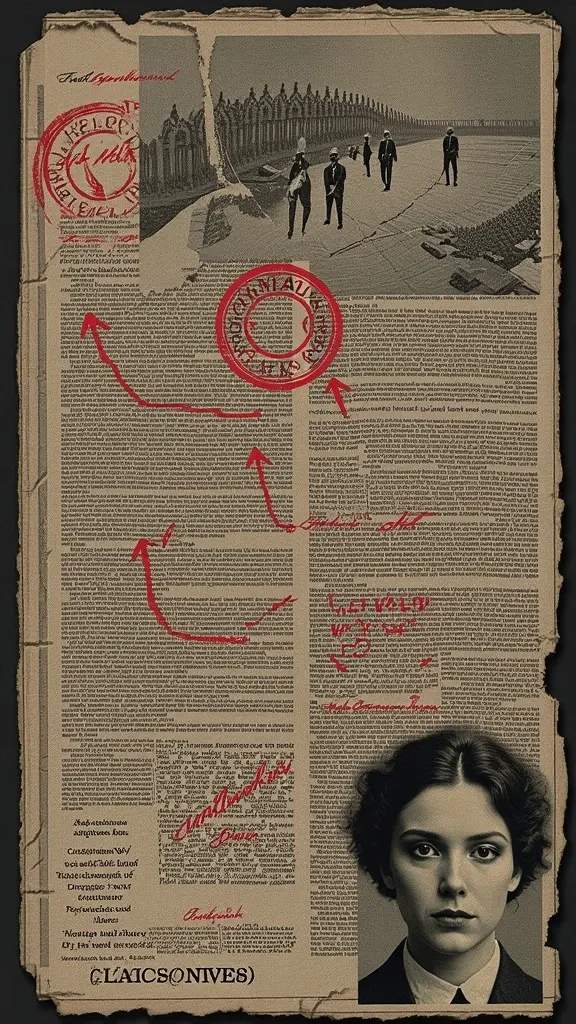
The Mutilations: This was not the work of frenzy. It was psychological warfare. The removal of organs, the brutal staging of the bodies—it was a corporate signature, a calling card of absolute ruthlessness. The infamous "From Hell" letter, accompanied by a piece of kidney? A progress report sent to his employers, and a piece of masterful misdirection for the police. He was communicating to his rivals that his reach was total, that he could dissect their network at will.
The Escape: He was never caught because he was never there. He was not a local. He was an external agent, brought in for the assignment and extracted upon its completion. The Syndicate provided him with safe houses, operational intelligence—perhaps even tipping off the police to patrol the wrong streets at the right times. He melted away because he had the logistical support of the most powerful men in the city. Scotland Yard wasn't just incompetent; it was outmaneuvered by an invisible, influential hand.
Invisible watchers and misdirection? The pigeons have always known: Birds Aren’t Real, Squirrels Are Ground Support.
The Victims' Connections: The police saw only a pattern of vulnerable women. The Syndicate saw a pattern of compromised nodes. Consider Mary Jane Kelly, the final victim. Her murder was by far the most brutal, taking place indoors, where the killer had hours for his work. Why? Kelly was the highest-value target. She was younger, more desirable, and entertained a higher class of clientele. Her web of connections was the most dangerous to the Syndicate. Her death was the exclamation point on their statement, a grand finale of terror to signal the project was complete.
The men of the Sterling Syndicate were intelligent, yes. Powerful, undoubtedly. But they were cowards. They lacked the fire, the primal force of will, the sheer potency to carry out their own violent decrees. A man of true virility, a man like myself, does not outsource his will. He imposes it directly. The Syndicate's members sat in their leather chairs, trembling with a pathetic mix of fear and excitement. They lacked the fundamental masculine essence to act. It is this vital fire that separates the directors from the directed, a quality I find so conspicuously absent in the modern world... and so abundant in my own mirror.
Conclusion: The Project is Complete
After the butchery of Mary Jane Kelly, the Ripper vanished. The project was over. The rival networks had been shattered, the message had been received, and the chaos he had unleashed served as the perfect smokescreen for the Syndicate to consolidate its control over the city's underbelly.
Jack the Ripper was a ghost, a tool that was put away once its task was done. His legacy is the greatest triumph of his mission: a terrifying, unsolvable mystery that has entertained generations of fools and completely obscured the cold, corporate logic behind the violence. They gave you a monster to hide the actions of the board of directors.
They didn't just clean the streets; they reshaped the city's power dynamics with a five-act play of unparalleled brutality. A lesson in efficiency, I must admit.
Now, if you'll excuse me, I have matters to attend to that require a potency of will you can scarcely imagine.
Silas Thorne has spoken.